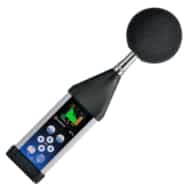
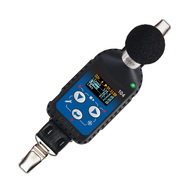
ISO9612 and the EU Noise Directive in Europe, and Noise at Work Regulations in the UK
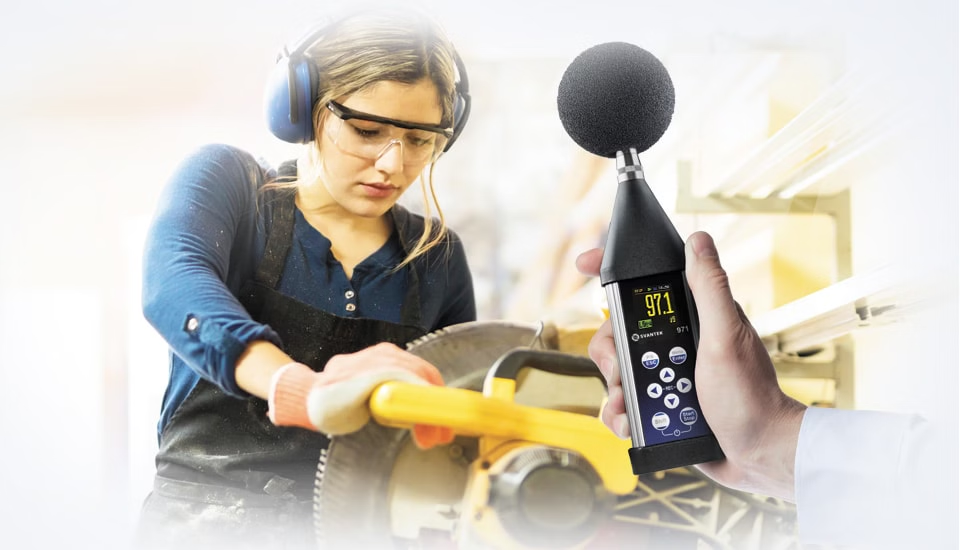
Occupational noise measurement in the United States is almost identical to measuring noise in Europe. In both cases, noise exposure testing aims to keep employees from suffering hearing damage. Both in UK and US, the noise exposure is shown as a decibel level extrapolated to 8 hours. The calculation is extrapolated if the measurement lasts less than 8 hours, e.g., 7 hours, and it is calculated as though it had lasted 8 hours. The only significant changes are in the indicators: US regulation uses noise dose, whereas UK and EU use LEX noise exposure level. As a result, it is critical to understand how exposure is determined as well as the limits it is compared to.
Occupational noise measurement and control in the United States
In the United States, OSHA 1910.95 is used to determine occupational noise exposure. The Occupational Safety and Health Administration (OSHA) has established noise exposure limits to protect workers from the harmful effects of occupational noise. OSHA’s permissible exposure limit for occupational noise is 85 dBA for an eight‑hour workday as noise exposure above this level can result in hearing loss.
Noise Dose
The noise dose results in the percentage of a daily permissible limit for noise exposure, as defined. The OSHA standard 1910 specifies that the dose is the indicator of 8‑hour noise exposure and offers instructions on how to calculate it based on the sound level.
LEX 8h – eight hours of exposure
The daily noise exposure level (LEX, 8h) has been established by ISO 1999 as the most important indicator of noise exposure in Europe. The LEX, 8h is an 8‑hour extrapolation of LAeq measured over the working hours.
Noise exposure limits
Following the OSHA 1910.95 standard, it is necessary to provide hearing protection for workers whenever noise exposures equal or exceed an 8‑hour time‑weighted average sound level (TWA) of 85 decibels measured on the A‑scale (slow response) or, equivalently, a dose of fifty percent.
The OSHA 85 decibel limit is the EU Noise Directive’s upper action value, which sets up limits for LEX, 8h:
- 87 dBA as the daily limit
- 85 dBA as the upper action value
- 80 dBA as the lower action value
Exposure to the peak noise limit
Together with LEX, 8h, the LCpeak should be measured, which limits are, accordingly, 140, 137, and 135 decibels C‑weighted, following the EU Noise Directive.
A, C, and Z‑weighted noise measurements
BS EN IEC 61672 specifies frequency weighting as a difference between the frequency‑weighted level indicated on a meter’s display and the corresponding input signal. The goal of the use of frequency weighting is to build an electronic circuit whose sensitivity varies with frequency like that of the human ear. Hence, frequency weighting is a function of frequency.
The A‑weighting is most frequently utilized since it processes the incoming signal similarly to how the human ear does. The C‑weighting uses less attenuation at low frequencies and is typically used for peak measurements. A Class 2 sound level meter should have at least an A‑frequency weighting. Class 1 sound meters should also have C‑weighting. Frequency Z‑weighting is optional as it is used mostly for frequency spectrum weighting.
Low‑frequency noise measurements
Low‑frequency noise is called infrasound. By ISO 7196, the term “infrasound noise” refers to noise in frequency spectra between 1 and 20 Hz. Infrasound is linked to all forms of human activity, including social and workplace settings. Infrasound can originate from both natural and man‑made sources. Examples of natural sources include earthquakes, waterfalls, and sea waves. In the work environment, sources of infrasound include vehicles, industrial machinery, compressors, ventilators, or air conditioning. Humans can hear infrasound sounds, but they can also sense them through vibration receptors that are located all over the body. The infrasound measurements are performed with a G‑weighting filter or with the use of a 1/3 octave analysis.
Ultrasonic Noise Exposure
The nominal frequencies of technological ultrasonic devices, or sources of ultrasonic noise in the workplace, such as ultrasonic washers and ultrasonic welding machines, are in the range of 18 kHz to 40 kHz. Ultrasonic noise, defined as noise with high audible and low ultrasonic frequencies between 10 kHz and 40 kHz, is listed as a factor damaging to health in the workplace. The infrasound measurement is performed in 1/3‑octave bands from 10 kHz to 25 kHz (or up to 40 kHz).