

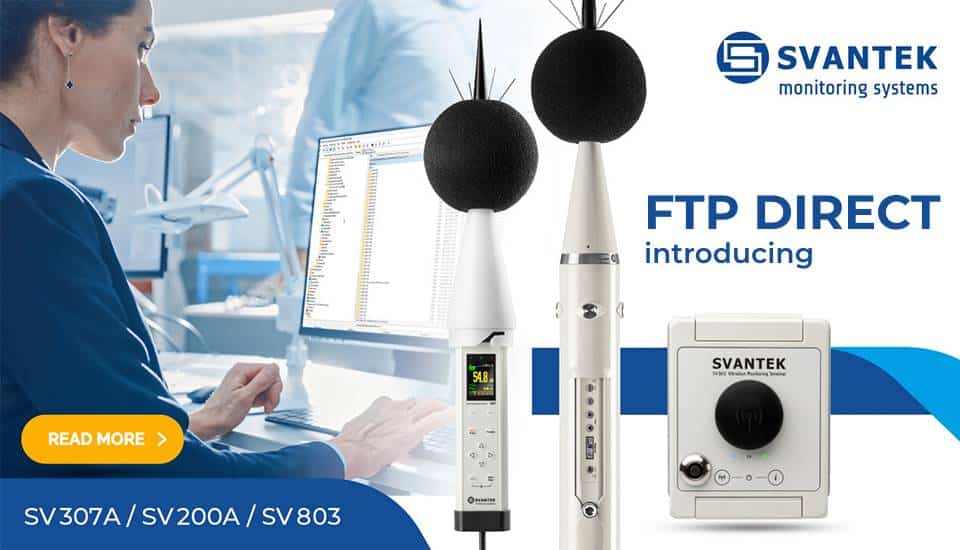
Why Do Customers Choose Svantek SV 307A and SV 803 FTP Direct Functionality for Large Environmental Projects?
What are Svantek SV 307A and SV 803?
Svantek SV 307A and SV 803 are state-of-the-art monitors designed for robust, long-term noise and vibration monitoring in challenging outdoor environments. These devices are ideal for a variety of applications including military operations, automotive testing, construction sites, urban areas, and traffic routes. They are equipped with 4G modems that facilitate efficient data transfer and reliable alarm communications, making them suitable for comprehensive environmental monitoring.
What is FTP Direct?
FTP Direct is a robust feature within Svantek measuring instruments that integrates both FTP push and FTP pull functionalities. FTP Push allows the instruments to automatically transmit data files directly to a client’s FTP server. This feature allows full control over the data, which is critical for sensitive and precise monitoring requirements found in sectors such as aviation, military, and manufacturing. On the other hand, FTP Pull enables the instruments to download and execute files from an FTP server, such as configuration settings that can be directly applied to the measurement process. Combining these capabilities, FTP Direct ensures efficient and seamless data management, facilitating both the remote updating of settings and the uploading of data for comprehensive analysis.
Why do customers choose FTP Direct for large environmental monitoring projects?
The FTP Direct functionality is highly valued in large environmental projects due to its capacity to seamlessly integrate noise and vibration data with other types of environmental data. This integration is essential for projects that monitor multiple environmental parameters simultaneously, such as water quality, gas emissions, air pollution, and meteorological conditions. The ability to merge data into a single system in a uniform format (CSV) simplifies data management and enhances the analysis process, enabling more informed decision-making.
How much does the FTP Direct cost?
The FTP Direct feature is activated through a firmware code specific to each monitor’s serial number, representing a one-time cost. There are no recurring fees, apart from the necessary expenses related to the internet connection, which depend on the SIM card chosen by the customer for use in the SV 307A or SV 803 units. Offering the Lowest Cost of Ownership in the industry, Svantek monitors with FTP Direct are a preferred choice for extensive environmental monitoring projects.
How to Obtain an Offer for Svantek Monitoring Solutions?
To explore the possibilities and obtain an offer tailored to your specific project needs with Svantek Monitoring Solutions, simply use the contact forms available on our website. Describe your project in detail, and our professional consultants will guide you through our extensive product range. They will recommend the right solutions to ensure that your environmental monitoring is as efficient and effective as possible. Don’t hesitate to reach out—our team is ready to assist you in selecting the ideal monitoring setup for your large-scale projects.
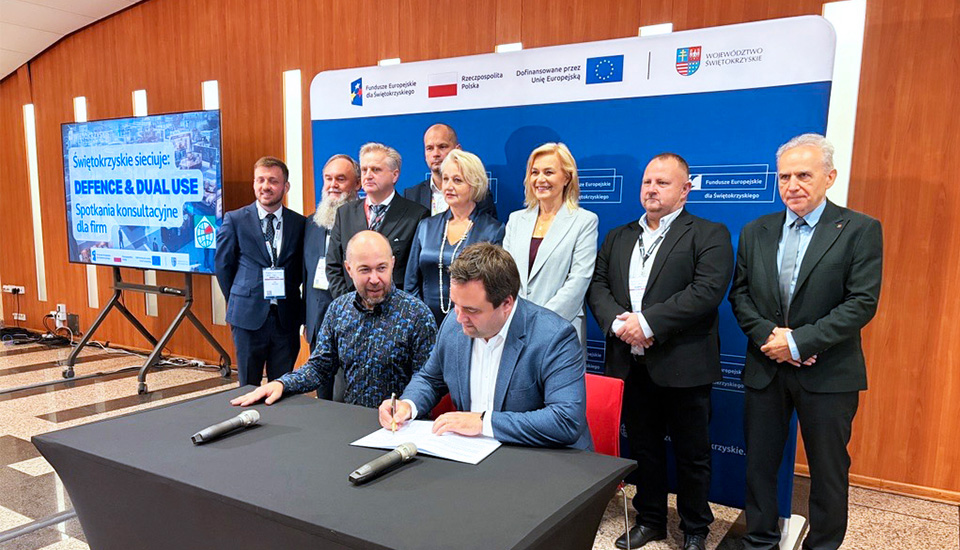
During MSPO 2026 in Kielce, SVANTEK President and CEO Bartłomiej Barwicz signed a letter of intent launching a new cooperation between industry, science and advanced technology.
The initiative opens new possibilities for applying SVANTEK technology in defence-related solutions. Our contribution builds on what we know best: precision measurement, acoustics, signal analysis and engineering expertise.
One of the first projects developed within this cooperation is a modular, multi-purpose unmanned ground platform. The system is designed as an open platform that can integrate different technologies depending on operational requirements, including solutions for threat detection and acoustic drone detection.
For SVANTEK, this is an opportunity to transfer decades of experience in professional acoustic and measurement technology into new fields of application.
The cooperation brings together ALEX, J&C Armament, Quantum Quest, SVANTEK, the Central Office of Measures, Kielce University of Technology and Bialystok University of Technology, combining expertise from industry, research and academia.
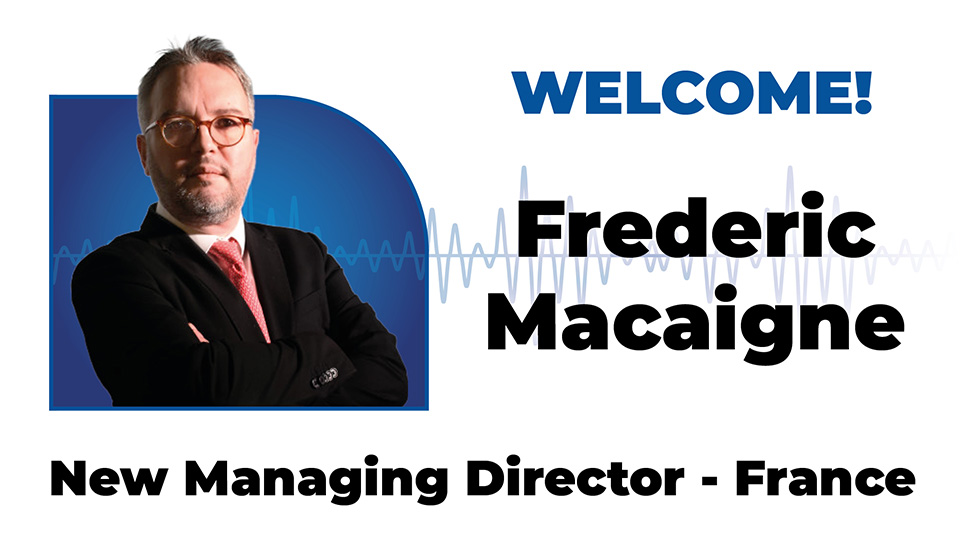
Frédéric describes himself simply: passionate about sound and metrology. Behind this passion is nearly 30 years of international experience in measurement instrumentation, working across markets on several continents. Throughout his career, he has followed a consistent approach: starting with the customer’s problem rather than the product catalogue.
He is already a familiar face to many SVANTEK users in France, having represented the SVANTEK range on the French market.
Frédéric joins us at an important moment as SVANTEK strengthens its direct presence in France, giving our customers and partners closer access to local technical support, calibration and expertise.
There will also be an opportunity to meet him very soon.
SVANTEK France will be exhibiting at Préventica Lyon, 6–8 October 2026 — Stand L11.
It will be our first Préventica as SVANTEK France and a great opportunity to meet Frédéric and the team, discuss your real-world measurement challenges, and explore our latest solutions for noise, vibration and environmental monitoring.
Eurexpo Lyon
6–8 October 2026
Stand L11
Please join us in welcoming Frédéric — and if you are attending Préventica, stop by Stand L11 and say hello.
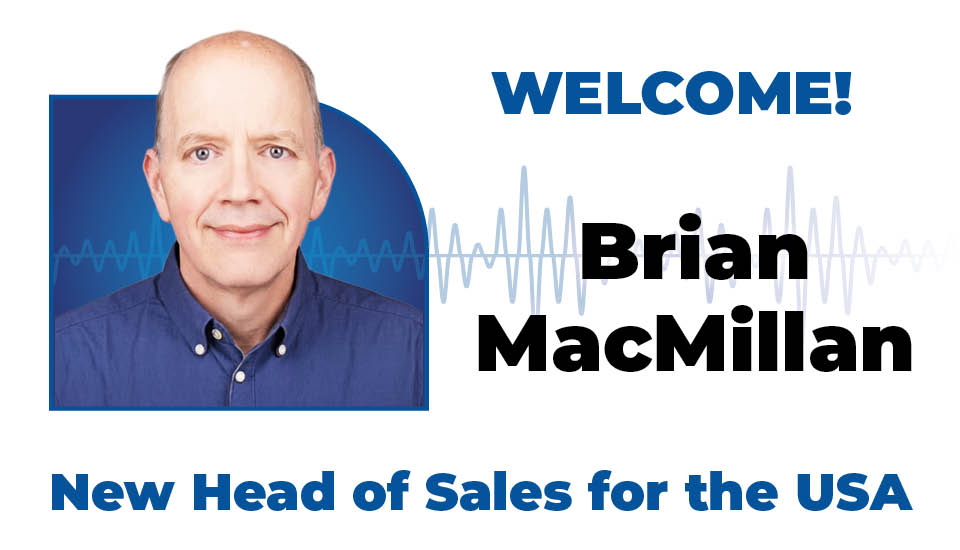
Svantek North America is pleased to announce Brian MacMillan as our new Head of Sales for the United States.
Brian brings three decades in sound and vibration instrumentation, with leadership roles at NTi Audio, Audio Precision, and Brüel & Kjær across the US and Europe. He is equally at home in the standards community that defines how noise is measured and judged. A member of the ASTM community noise and building acoustics committees, represented instrumentation manufacturers on the ANSI working group that recently updated the ANSI S12.2 room noise criteria, and served on the City of Portland Noise Advisory Workgroup, which just completed its work.
Ask Brian what drives that work, and he will tell you it is balance: communities need both the people who make noise and the people who live next to it, and effective measurement is how they find common ground. As an avid pickleball player, he has spent time on both sides of that line. Please join us in welcoming Brian. If you are attending NoiseCon in Long Beach (9-11 JULY 2026), stop by the Booth #24 and say hello.
