Aviation Noise

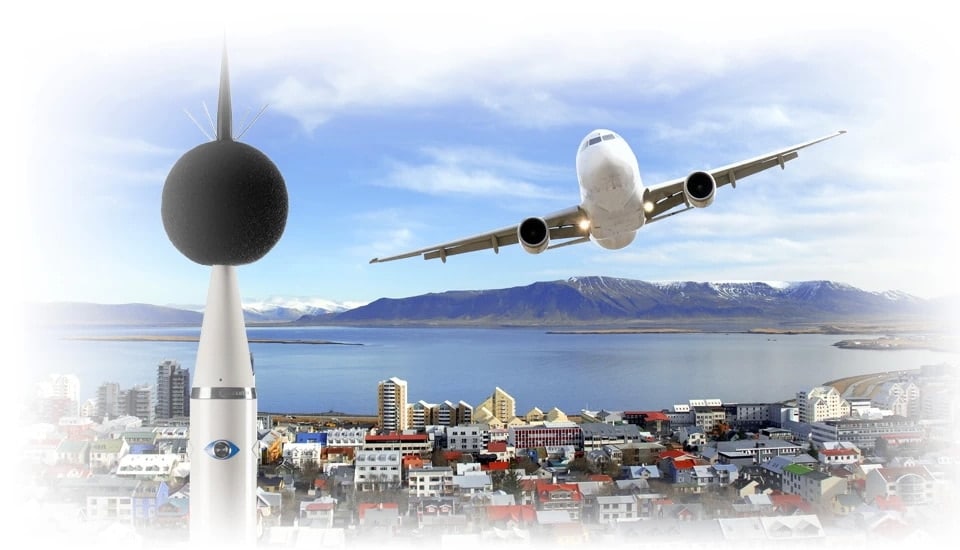
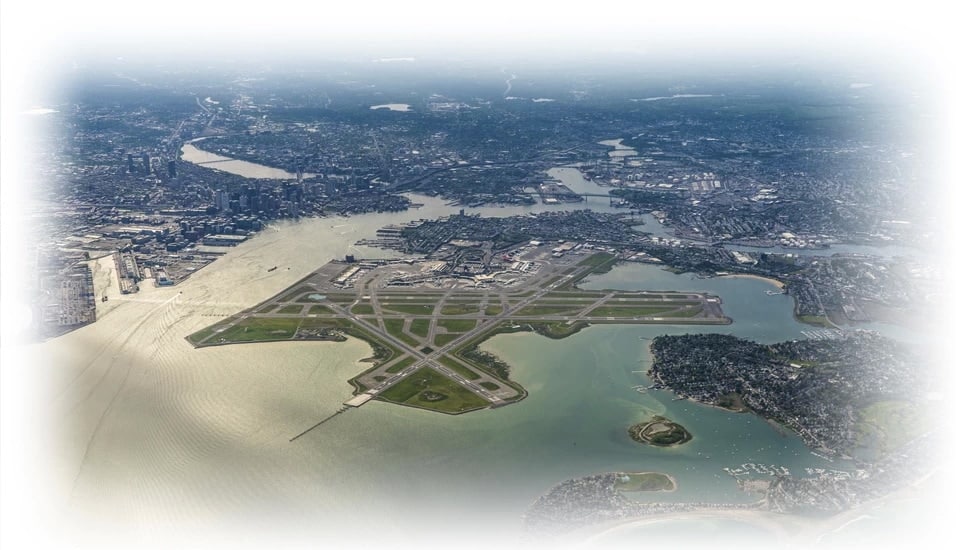
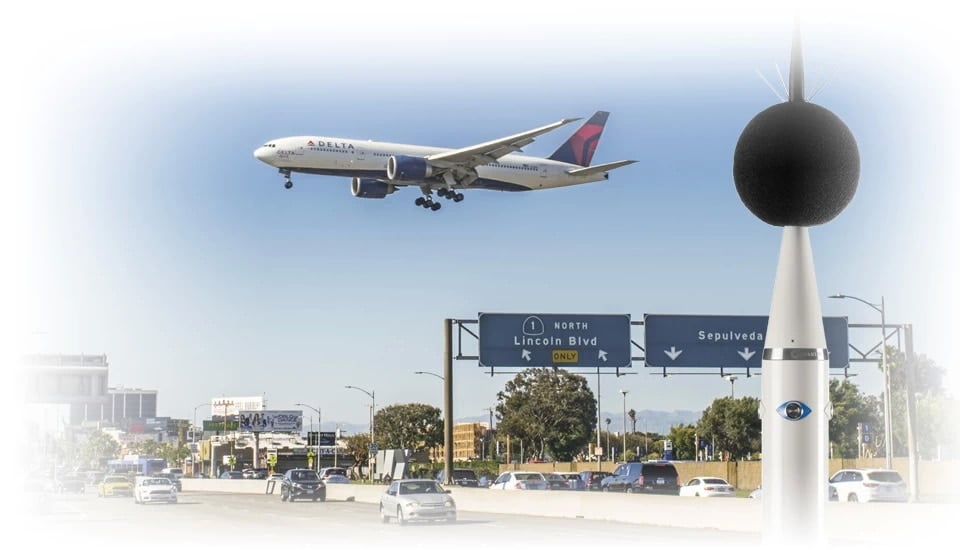
Aviation noise refers to the sound produced by aircraft during take-off, landing, and ground movements on airport property. This is a significant environmental issue in the UK, as major airports like London Heathrow, Gatwick, Manchester, and Birmingham are located near densely populated residential areas. Prolonged exposure to such noise can negatively impact the health and wellbeing of residents, with research linking high noise levels to sleep disturbance, stress, and an increased risk of cardiovascular diseases.
czym jest halas lotniczy

UK Airport Noise Monitoring Requirements

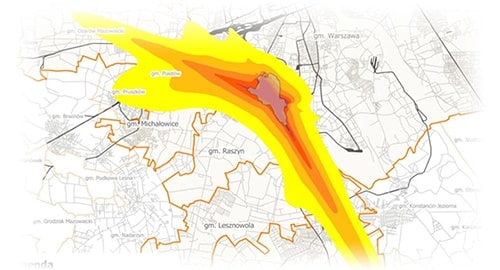
Under the Environmental Noise (England) Regulations 2006, major UK airports are legally required to produce strategic noise maps every five years. These maps, which illustrate noise exposure levels, serve as the basis for a mandatory Noise Action Plan (NAP). While the five-year mapping cycle is the statutory minimum for these reports, airports must also review and, if necessary, revise their maps whenever a major development occurs that significantly alters the local acoustic environment.

The specific nature of monitoring—whether periodic or continuous—depends on the airport’s size and the sensitivity of the surrounding area. Larger or “designated” airports, such as Heathrow, Gatwick, and Stansted, often employ continuous noise monitoring systems (NMS) to track every flight and ensure compliance with noise-abatement procedures. In contrast, smaller aerodromes may only be required to conduct periodic measurements to meet their five-yearly obligations. All data collection must follow a proportionality principle, ensuring that the level of technical detail in the noise analysis is appropriate to the airport’s scale and its potential impact on nearby residents.

Night Flight Noise Restrictions

At designated UK airports—specifically Heathrow, Gatwick, and Stansted—the government enforces strict night flight restrictions between 23:00 and 07:00 to mitigate sleep disturbance for local residents. These regulations utilize a Quota Count (QC) system, which assigns points to aircraft based on their certified noise levels; quieter aircraft receive lower scores, while louder ones are “penalized” with higher values. Each airport is allocated a seasonal noise quota, effectively capping the total acoustic energy permitted during the night period and incentivising airlines to operate their modern, quieter fleets.

Current policy also includes specific “movement limits” that restrict the absolute number of take-offs and landings allowed during the Night Quota Period (23:30 to 06:00). For instance, Heathrow is restricted to 5,800 night movements annually, with the vast majority occurring after 04:30. While most UK airports have some form of night-time control through local planning conditions, the Department for Transport (DfT) maintains direct oversight of these three major hubs, with new Airport Noise-Related Operating Restrictions.

Statutory Noise Mapping Intervals

Under the Environmental Noise (England) Regulations 2006, major UK airports must conduct strategic noise mapping and review their Noise Action Plans every five years. This cycle, often referred to as “Rounds,” ensures that the data used to manage local acoustic impacts remains current and accounts for changes in air traffic volume or aircraft types. While the five-year interval is the legal minimum for strategic reporting, airports are also required to review and potentially update their noise assessments whenever a major development occurs that significantly alters the existing noise environment. For operational purposes, many larger airports supplement these periodic requirements with continuous automated monitoring to provide real-time data for local communities and to enforce specific night-flight noise limits.

Noise monitoring thresholds for UK airports

UK airport operators are required to perform noise assessments based on the volume of annual aircraft movements.

  • Strategic noise mapping is mandatory for any civil airport with more than 50,000 movements (take-offs or landings) per year, averaged over a three-year period.
  • Noise Action Plans must be developed every five years for these major airports to manage and reduce environmental noise.
  • Urban area requirements extend these obligations to airports near large urbanised agglomerations of over 100,000 people, specifically where aircraft noise causes an average daytime noise level (Lden) of 55 dBA or a night-time level (Lnight) of 50 dBA.
  • Local monitoring is often supplemented by individual airport policies, such as Manchester Airport and London Stansted, which use fixed and mobile monitors to track compliance with specific noise limits and penalty schemes.

dlaczego nalezy kontrolowac halas na lotniskach

Aircraft noise metrics and data correlation

UK airport noise management uses Noise and Track Keeping (NTK) systems to link acoustic data with specific radar tracks. For every movement, monitors record the Sound Exposure Level (SEL)—representing total energy—and the LAmax level. These individual events are categorised by aircraft type, airline, and runway usage, allowing operators to monitor compliance with noise limits. Major hubs like Heathrow also utilise the Effective Perceived Noise Level (EPNL) to better reflect human sensitivity to the duration and tone of aircraft flyovers.

Long-term exposure is measured using cumulative indices to assess community impact. The LAeq,16h is the primary daytime metric, averaging noise over a 16-hour period during the peak summer months. For 24-hour monitoring, the Lden (Day-Evening-Night Level) is used, which applies a 5dB penalty for evening noise and a 10dB penalty for night noise. These measurements ensure that airport operations are tracked against both immediate noise limits and annual environmental targets.

monitoring halasu
punkty pomiarowe

Standards for aircraft noise measurement point positioning

In the UK, noise measurement points are strategically placed to capture representative data for both individual aircraft events and long-term community impact. The Civil Aviation Authority (CAA) requires at least two monitoring distances for arrivals and departures to ensure accurate noise modelling. For general environmental assessments, microphones are typically mounted in a free-field position at a height of 1.2 to 1.5 metres above ground level, ensuring they are at least one metre away from any reflective surfaces like walls or fences.
For measurements taken at a building’s exterior, the microphone is positioned between 0.5m and 2m from the façade, usually level with a window. Because these “façade measurements” include sound reflected from the building, a 3 dB reduction is applied to the results to convert them back to a free-field equivalent. At major airports like Heathrow, fixed monitors are often placed in open areas such as golf courses or public parks to avoid interference from local traffic or obstacles that could obstruct the “line of sight” to the aircraft.

Aircraft noise measurement equipment

UK regulations specify that noise measurement equipment must adhere to high-precision standards to ensure data validity for environmental and legal reporting. Instruments must comply with Class 1 specifications of BS EN 61672-1, which is the preferred standard for environmental monitoring due to its higher accuracy and stability compared to Class 2 devices. For continuous monitoring, the system must include a microphone protection system to shield against wind and rain, along with an acoustic calibrator meeting BS EN 60942.

To account for atmospheric interference, measurement stations are often integrated with meteorological sensors to track wind speed, direction, temperature, and humidity. These sensors help determine if weather conditions have invalidated a noise event or if corrections are required for sound propagation. Furthermore, equipment requires periodic laboratory calibration—typically every two years for the sound level meter and annually for the field calibrator—to maintain UKAS-accredited traceability.

halas lotniczy sprzet pomiarowy

Meteorological requirements for UK aircraft noise monitoring

In the UK, aircraft noise measurements must be conducted under stable weather conditions to ensure that atmospheric effects do not distort the results. Standard practice, aligned with BS 7445, generally requires that wind speeds do not exceed 5 m/s at the microphone height, as higher velocities can induce “wind noise” across the diaphragm that masks the actual aircraft sound. Measurements are typically avoided during periods of precipitation—including rain, snow, or hail—or when the ground is significantly wet, as these conditions alter sound reflection and absorption.

Acoustic data is further refined by monitoring temperature, humidity, and atmospheric pressure, which directly influence how sound travels from the aircraft to the ground. For official noise certification and strategic mapping, the Civil Aviation Authority (CAA) often uses reference conditions, such as an ambient temperature of 25°C and a sea-level pressure of 1013.25 hPa, to standardise results. Measurements taken during extreme weather events or outside established operational ranges are flagged or excluded from long-term averages to maintain the precision of noise contours.

halas lotniczy

How to estimate uncertainties in airport noise measurements?

The estimation of uncertainty for airport noise follows the principles of ISO 1996 and BS 4142, requiring a high degree of technical acoustic expertise. Uncertainty must be calculated at a 95% confidence level, accounting for variables such as instrument precision, source variability, and fluctuating weather conditions. To ensure the reliability of noise contours and compliance reports, the total expanded uncertainty is generally expected to be less than 3 dB; results exceeding this margin may be deemed insufficient for formal environmental impact assessments.

To achieve this level of precision, airport operators must quantify both Type A (statistical) and Type B (systematic) uncertainties. This includes assessing the calibration drift of Class 1 monitoring equipment, the impact of background residual noise, and the specific geometry of the measurement site. By maintaining a rigorous uncertainty budget, UK airports ensure that the reported LAeq and Lden
levels are robust enough to withstand legal scrutiny and inform public policy regarding noise mitigation.

aircraft noise acoustics map

Reporting standards

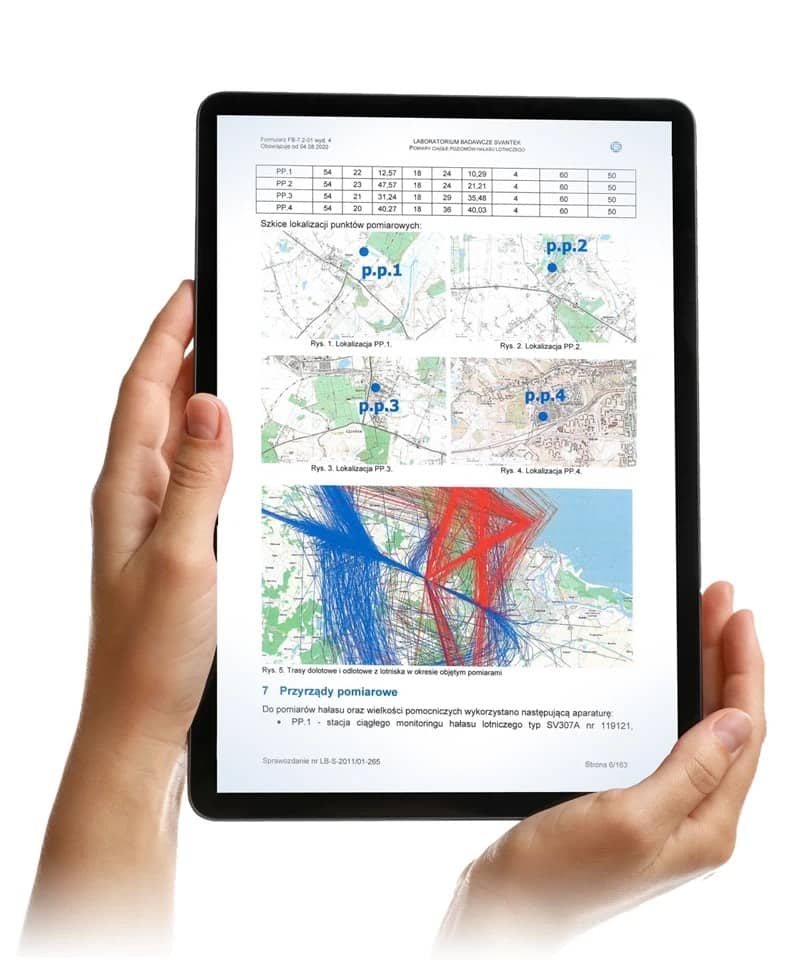
Airport operators are required to produce regular noise reports that provide a transparent record of acoustic performance for the Civil Aviation Authority (CAA) and local community forums. Monthly reports must detail the airport operator, the monitoring period, and the technical specifications of the Class 1 measurement equipment used. These documents specify the exact coordinates of monitoring stations, the surrounding terrain characteristics, and the meteorological conditions—such as wind speed and temperature—recorded during the measurement window to ensure data validity.

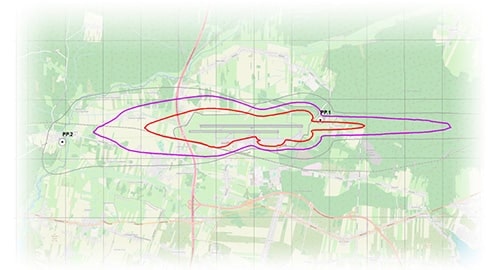
Annual reports consolidate this data into a comprehensive yearly overview, typically including noise contour maps that illustrate the geographical spread of the LAeq,16h
and Lden indices. These reports must categorise noise events by aircraft type, airline, and specific flight path, while also tracking the number of “noise infringements” where aircraft exceeded established decibel limits. By integrating radar tracking with ground-based acoustic data, the reports provide a precise audit of how different runways and vessel classes contribute to the total noise footprint of the airport.

pomiary halasu na lotniskach

Aircraft noise modelling and calculation methods

When physical measurements are not possible or representative, noise levels are estimated using advanced computer-based calculation methods. The Civil Aviation Authority (CAA) uses the ANCON (Aircraft Noise Contour) model as its primary tool for generating strategic noise maps and contours. This model is regularly benchmarked against international best practices and uses historical radar and noise data to simulate aircraft performance and sound propagation across specific terrains.

For regulatory compliance, UK calculation methods must align with the standards set out in ECAC.CEAC Doc 29, which provides a standard method for computing noise contours around civil airports. While some smaller airports may still reference the Integrated Noise Model (INM), many are transitioning to the Aviation Environmental Design Tool (AEDT), which has replaced INM as the modern global standard for environmental modelling. These tools allow operators to predict the impact of future flight paths or aircraft types by using Noise-Power-Distance (NPD) tables and standard atmospheric corrections.

hałas lotniczy

Professional aircraft noise monitoring by SVANTEK

SVANTEK uses Class 1 noise monitoring stations, such as the SV 307A and the SV 200A, to provide continuous, high-precision acoustic data for major infrastructure. These stations are equipped with MEMS microphones and integrated 4G modems, allowing for automated data transfer to the SvanNET cloud platform. The SV 200A is specifically designed for aviation, utilizing a five-microphone array to detect noise directivity in both horizontal and vertical planes, which helps distinguish aircraft flyovers from ground-level interference like traffic or animals.

The monitoring process generates detailed monthly and annual reports that categorise every noise event by its ICAO aircraft code and correlate it with radar track data. These reports exclude measurements taken during unfavourable meteorological conditions—such as high winds or heavy rain—to ensure the accuracy of the final noise contours. By combining acoustic measurements with the SvanPC++ software, operators can produce graphical A-weighted noise curves and automated alerts, helping airports meet the Civil Aviation Authority (CAA) requirements for environmental compliance.

pomiary ciagle halasu lotniczego

Request a quote


    Please indicate the subject of your enquiry:

    I hereby consent to the processing of my personal data, i.e. my full name and e-mail address, by SVANTEK SP. Z O.O. with its registered office in Warsaw at ul. Strzygłowska 81 for the purpose of receiving marketing information on the products and services offered by SVANTEK SP. Z O.O. via electronic means of communication, in particular via e-mail, in accordance with the provisions of Article 10 sec. 1 and 2 of the Act on providing services by electronic means.

    I hereby consent to the processing of my personal data, i.e. my full name and phone number, by SVANTEK SP. Z O.O. with its registered office in Warsaw at ul. Strzygłowska 81 for the purpose of marketing activities with the use of telecommunications terminal equipment and automatic calling machines within the meaning of the Telecommunications Act.

    I hereby consent to receiving from SVANTEK SP. Z O.O. with its registered office in Warsaw at ul. Strzygłowska 81, via electronic means to the e-mail address I have provided, the newsletter and marketing information on the products and services offered by SVANTEK SP. Z O.O., within the meaning of the Act on providing services by electronic means.


    I declare that I have been informed that my data may be transferred to entities that process personal data on behalf of the Administrator, in particular to distributors - such entities process data on the basis of an agreement with the Administrator and exclusively in accordance with its instructions. In such cases, the Administrator requires third parties to maintain the confidentiality and security of information and verifies that they provide appropriate measures to protect personal data.

    Some of the entities processing personal data on behalf of the Administrator are established outside the EEA. In connection with the transfer of your data outside the EEA, the Administrator verifies that these entities provide guarantees of a high level of personal data protection. These guarantees stem in particular from the obligation to apply the standard contractual clauses adopted by the Commission (EU). You have the right to request a copy of the standard contractual clauses by sending a request to the Controller.

    I declare that I have been informed on my right to withdraw my consent to the processing of my personal data at any time, to access the provided personal data, to rectify, erase, restrict processing and object to the processing of my data, as well as the right to lodge a complaint with the President of the of the Personal Data Protection Office in the event of an infringement of the provisions of GDPR.