Noise at the International Space Station
Challenges and Innovations

Excessive noise detrimentally affects both spacecraft systems and astronaut well-being. High decibel levels can mask critical alarms and interfere with sensitive instruments. Personnel exposed to loud or continuous noise often experience hearing loss, stress, and reduced cognitive performance. A managed acoustic environment is essential for maintaining clear communication, efficient operations, and crew health.

Noise Levels in Rockets and Spacecraft

The noise produced during rocket launches ranks amongst the highest of any human endeavour. Historic vehicles, such as the Saturn V, reached levels of approximately 204.7 dB, whilst modern launch systems—including NASA’s Space Launch System (SLS) at around 202.4 dB and the Super Heavy Rocket System at 150 dB—remain extremely loud. Engineers employ specialised insulation and sound-damping technologies to restrict the transmission of this noise to the spacecraft interior. These measures safeguard both onboard instruments and the crew from hazardous decibel levels during liftoff and ascent.

Noise Levels in Rockets and Spacecraft ​Svantek

Wireless Acoustic - AXIOM Mission 4 - Svantek in space!

Experience an exclusive look at the AXIOM Mission 4 astronauts’ meeting with media, investors, and space enthusiasts at the Copernicus Science Centre in Warsaw, Poland. This special event highlights the mission’s goals, international collaboration, and groundbreaking technologies, including Wireless Acoustics by SVANTEK, designed for astronaut health monitoring in space. Discover how Poland is contributing to the future of space exploration and hear firsthand insights from the astronauts shaping the next chapter of human spaceflight.

The Acoustic Environment of the International Space Station (ISS)

Constant Background Noise

Unlike the short bursts of extreme noise associated with launch, the International Space Station (ISS) maintains a constant background noise averaging approximately 72 dBA. Hundreds of systems—including ventilation, life support, and scientific equipment—operate continuously, creating a persistent hum that fluctuates significantly. This dynamic acoustic environment requires rigorous monitoring to detect and mitigate noise levels that could compromise crew health or interfere with station operations.

Effects of Noise on Crew Health and Operations

Decades of research, spanning from Skylab and Mir to the ISS, indicate that prolonged noise exposure increases the risk of noise-induced hearing loss (NIHL). High noise levels also induce stress, hinder communication, and may mask critical alarms. As the ISS is an enclosed environment, astronauts have limited means to escape persistent noise. A controlled acoustic atmosphere is therefore vital for maintaining crew concentration and well-being, particularly during extended missions.

Long-term Studies and Findings

Data collected since November 2001 reveal that astronauts sometimes exceed safe noise exposure limits. Even with protective strategies, constant background noise still poses a health risk over time. These findings underscore the necessity for ongoing improvements in noise management and monitoring to protect crews on future, longer missions—especially as space agencies plan for deeper space exploration. 

Managing Noise in Space Missions

Engineers employ various strategies to mitigate noise in space. Physical modifications—like acoustic blankets, improved insulation, and water-based sound-dampening—help reduce high noise from rocket engines (for example, from 195 dB down to around 142 dB). Inside spacecraft, acoustic dosimeters provide ongoing measurements of noise exposure, guiding adjustments to keep sound at safer levels.

Svantek’s Role in Space Noise Monitoring

Svantek, a leader in acoustic and vibration measurement, has supplied NASA with noise-monitoring equipment for over a decade. The SV 102A+ noise dosimeter was previously deployed on the ISS to track and manage crew exposure. As the European Space Agency (ESA) prepares for the Gateway station in lunar orbit, it intends to adopt next-generation noise-monitoring technology. This system must be compact, lightweight, and Bluetooth-enabled to facilitate data transfer to health management software, such as EveryWear.

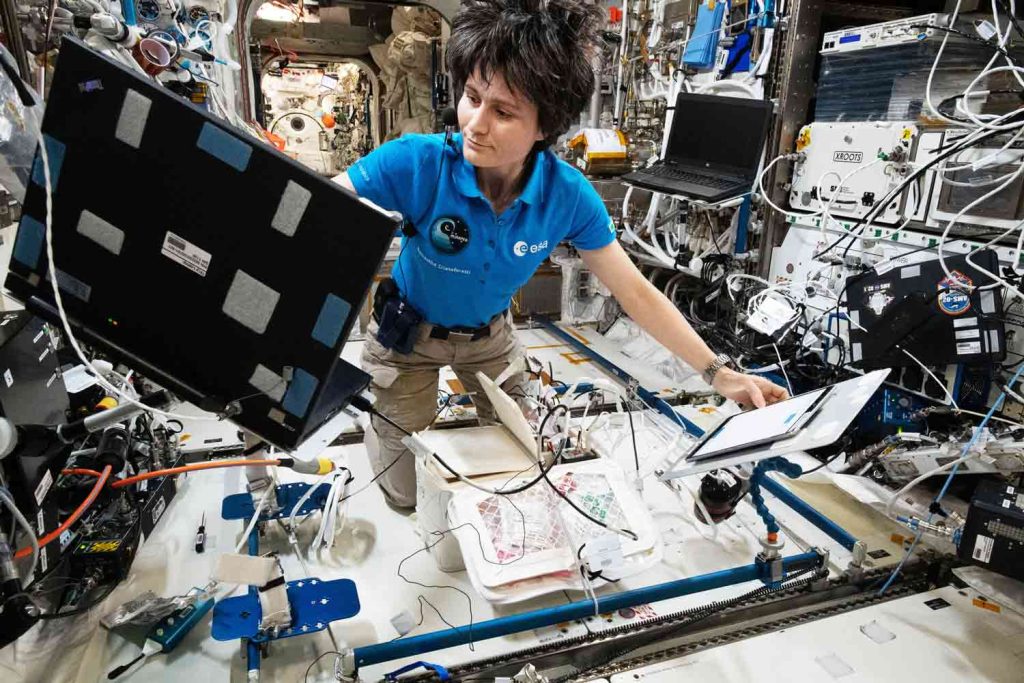
Samantha Cristoforetti performs Acoustic Diagnostics aboard the ISS pillars with SV 102A+. Image: ESA/NASA

Historic Milestone for Polish Acoustics

The Wireless Acoustics project, developed by Svantek under leadership of engineer Karol Sazonow, in partnership with ESA and NASA, represents a significant leap in how acoustic data is collected and used for crew health. This is the first time advanced Polish sound-monitoring systems will be tested in space, marking an important step for Poland’s presence in the field of space acoustics.

The Historic Role of Sławosz Uznański - Wiśniewski

Sławosz Uznański – Wiśniewski, a Polish astronaut, will conduct hands-on tests of Svantek’s devices during his long-term ISS mission. His practical feedback will help refine the technology for future initiatives, including the planned Gateway station, and enhance overall noise monitoring for long-duration flights.

SVANTEK WIRELESS ACOUSTICS AXIOM MISSION 4 Ax-4 Dosimeter

Real-time Sound Recording and Analysis Technology

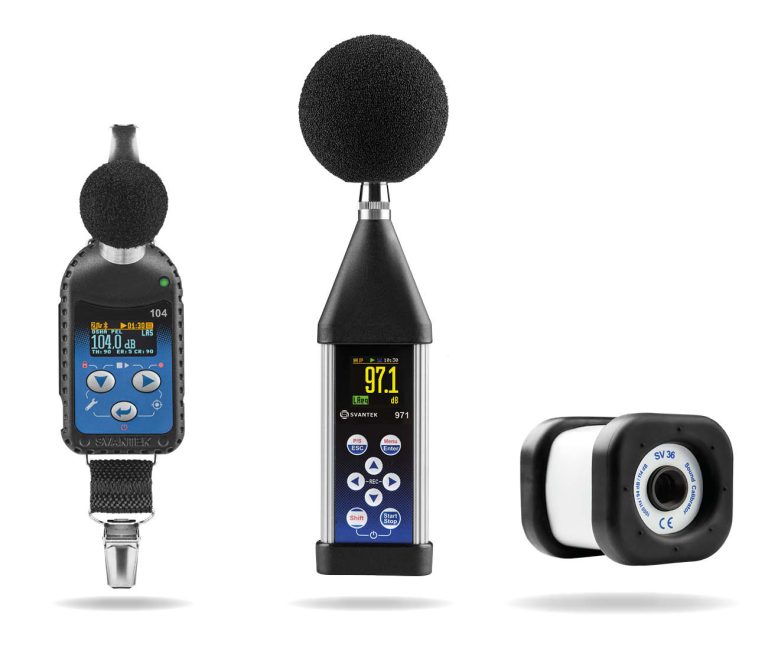
The Wireless Acoustics project introduces a pioneering system of wireless measurement devices capable of continuous, real-time sound recording and analysis. During the ISS experiment, three key Svantek instruments will be tested:

  1. SV 104A – A personal acoustic dosimeter worn by astronauts. It measures noise levels at the ear over a 24-hour period, providing precise data on daily sound exposure.
  2. SV 971A – A Class 1 sound level meter positioned at a fixed location in the Columbus module, used to identify specific noise sources and assess their impact on astronaut health.
  3. SV 36 – A Class 1 acoustic calibrator that ensures the SV 104A and SV 971A remain accurately calibrated, compensating for variations in temperature, humidity, or pressure.

Bluetooth Technology – Modern Wireless Communication

A major innovation in the Wireless Acoustics system is Bluetooth-based data transmission, allowing sound meters to stream real-time information to the EveryWear app on astronauts’ iPads. This not only simplifies data collection but also provides near-instant analysis for ground-based acoustics specialists. Encryption designed by Svantek’s developers ensures medical data remains secure during wireless transfer. Demonstrating Bluetooth’s reliability in orbit could pave the way for broader wireless systems in future missions, like the Gateway.

Rigorous Shock and EMC Testing

Prior to reaching orbit, Svantek’s devices underwent rigorous testing on Earth:

  • Shock testing: Simulations of the extreme vibrations associated with rocket launches guaranteed that the devices remain functional under intense mechanical strain.
  • Electromagnetic Compatibility (EMC) testing: The instruments were verified against military-grade standards for resistance to electromagnetic interference—a level of scrutiny rarely applied to commercial sound meters.

These comprehensive trials confirmed that Svantek’s products can withstand the rigours of space travel and operate reliably within the complex electromagnetic environment of the ISS.

Data Collection and Transfer Methodologies on ISS

Astronauts require consistent noise-level information to support daily safety and mission objectives. Svantek’s devices record noise data at one-minute intervals over 24-hour periods, generating detailed profiles of both personal and ambient sound levels within the ISS. A Bluetooth link to the EveryWear system transmits this data automatically, where it is subsequently downlinked to Earth for expert evaluation. This streamlined process ensures near-real-time feedback, facilitating rapid intervention should noise levels rise excessively.

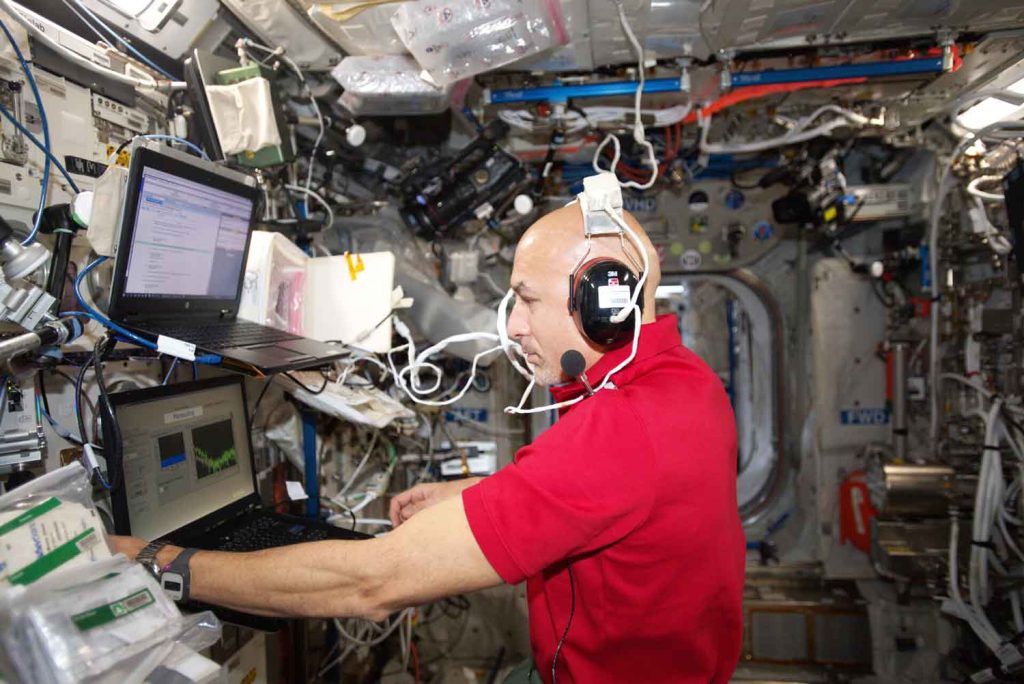
Luca Parmitano running "Acoustic Diagnostics", an Italian Space Agency (ASI) experiment, in cooperation with the University of Rome Tor Vergata, to study the effects of the background noise of the ISS on the hearing of the astronauts. Svantek Sv 102 ESA
Luca Parmitano running Acoustic Diagnostics, to study ISS background noise effects on astronaut's health. Image: ESA/NASA

User Experience and Comparative Analysis

User experience is critical for any equipment deployed on the ISS. Instruments must be straightforward to configure and operate whilst astronauts conduct routine station activities. Comparative analyses indicate that newer models, such as the SV 104A and SV 971A, surpass legacy devices by delivering superior data quality and simplified operation. These advantages enable crew members to acquire more accurate information without increasing their operational workload.

Future Directions and Improvements in Noise Management

Looking ahead, smaller, more precise, and more energy-efficient devices will likely dominate spacecraft acoustics. Such advancements will enable rapid, automatic responses to changing noise conditions. Deeper integration with health management software—like ESA’s EveryWear—offers a single, unified platform for tracking both noise exposure and other health parameters, ensuring a holistic approach to crew well-being.

Prospects for Further Enhancing Acoustic Safety on ISS

ESA, NASA, and Svantek continue collaborating to bolster ISS noise safety. Efforts may include advanced real-time noise analysis algorithms, alert systems that activate preventive measures if limits are reached, and ongoing refinements to training for astronauts in noise monitoring. These improvements will help maintain a quieter and safer environment, paving the way for healthier, more productive crew members during prolonged missions.

Key Takeaways

  1. Complex Acoustic Environment: The ISS is characterised by operational machinery and systems that generate continuous noise, necessitating advanced monitoring strategies to ensure crew safety.
  2. Svantek’s Innovative Systems: Devices such as the SV 102A+, SV 104A, and SV 971A are crucial for capturing both ambient and personal noise exposure on the ISS.
  3. Wireless Acoustics Project: Real-time data transfer via Bluetooth to the EveryWear software accelerates acoustic monitoring and facilitates immediate responses by ground experts.
  4. Enhanced User Experience: Newer dosimeters and sound level meters offer improved accuracy, comfort, and ease of use compared to older systems, thereby better meeting the needs of astronauts.
  5. Future Pathways: Ongoing research and closer integration with health systems will refine noise management protocols, supporting long-term crew health and successful deep-space missions.

Request more information on Svantek Instrumentation


    Please indicate the subject of your enquiry:

    I hereby consent to the processing of my personal data, i.e. my full name and e-mail address, by SVANTEK SP. Z O.O. with its registered office in Warsaw at ul. Strzygłowska 81 for the purpose of receiving marketing information on the products and services offered by SVANTEK SP. Z O.O. via electronic means of communication, in particular via e-mail, in accordance with the provisions of Article 10 sec. 1 and 2 of the Act on providing services by electronic means.

    I hereby consent to the processing of my personal data, i.e. my full name and phone number, by SVANTEK SP. Z O.O. with its registered office in Warsaw at ul. Strzygłowska 81 for the purpose of marketing activities with the use of telecommunications terminal equipment and automatic calling machines within the meaning of the Telecommunications Act.

    I hereby consent to receiving from SVANTEK SP. Z O.O. with its registered office in Warsaw at ul. Strzygłowska 81, via electronic means to the e-mail address I have provided, the newsletter and marketing information on the products and services offered by SVANTEK SP. Z O.O., within the meaning of the Act on providing services by electronic means.


    I declare that I have been informed that my data may be transferred to entities that process personal data on behalf of the Administrator, in particular to distributors - such entities process data on the basis of an agreement with the Administrator and exclusively in accordance with its instructions. In such cases, the Administrator requires third parties to maintain the confidentiality and security of information and verifies that they provide appropriate measures to protect personal data.

    Some of the entities processing personal data on behalf of the Administrator are established outside the EEA. In connection with the transfer of your data outside the EEA, the Administrator verifies that these entities provide guarantees of a high level of personal data protection. These guarantees stem in particular from the obligation to apply the standard contractual clauses adopted by the Commission (EU). You have the right to request a copy of the standard contractual clauses by sending a request to the Controller.

    I declare that I have been informed on my right to withdraw my consent to the processing of my personal data at any time, to access the provided personal data, to rectify, erase, restrict processing and object to the processing of my data, as well as the right to lodge a complaint with the President of the of the Personal Data Protection Office in the event of an infringement of the provisions of GDPR.