Car Racing Noise: Can It Damage Your Hearing?  How Many Decibels at the Race Track is Safe?

Yes, car racing noise can indeed damage your hearing. The noise levels at events like NASCAR, F1, and MotoGP races often exceed 130 decibels, posing a significant risk to hearing health.

How Many Decibels at the Race Track is Safe?

According to the Health and Safety Executive (HSE), prolonged exposure to noise levels above 85 decibels (dBA) can damage hearing. The Control of Noise at Work Regulations 2005 set an exposure limit value of 87 dB for an 8-hour working day. At most race tracks, noise levels commonly exceed these limits, with levels often reaching and surpassing 130 dB, particularly in the pit area. This is well above the safe threshold and can cause immediate and permanent hearing damage.

85 dB

Where Does Car Racing Noise Come From?

Whether it’s the V6 combustion engine of Formula 1 or the thunderous V8s in NASCAR races the primary source of car racing noise is the powerful engines of the race cars. Unlike regular vehicles, racing engines are designed without silencers to maximise airflow and fuel combustion efficiency. This design choice allows for greater engine performance but results in significantly higher noise levels. The exhaust systems, featuring components like headers, aggressive camshaft profiles, and higher compression ratios, contribute to the distinctive loudness of race cars.

How to Mitigate the Risk of Hearing Damage at the Race Track?

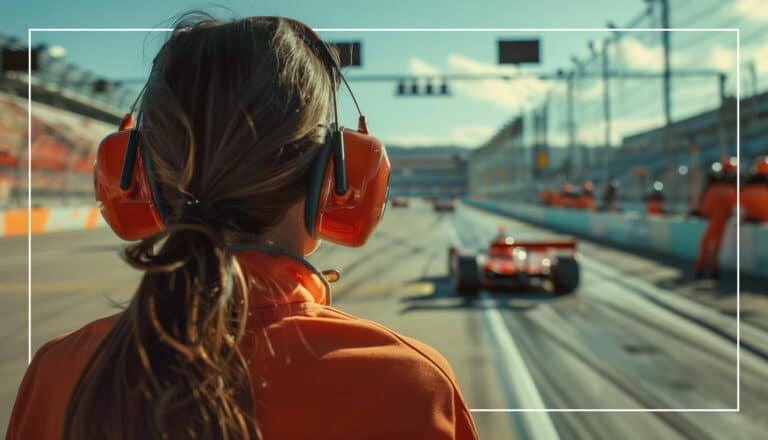
To mitigate the risk of hearing damage at the race track, it is essential to take the following precautions:

  • Wear Ear Protection: Use ear plugs and ear defenders to significantly reduce noise exposure. Selecting ear protection with appropriate Single Number Ratings (SNR) using tools like Supervisor software ensures adequate protection.
  • Avoid Close Proximity to the Track: Sitting further away from the track can reduce exposure to high decibel levels.
  • Utilise Noise Monitoring: Employ noise monitoring systems around the race track to measure and manage noise levels in real-time. These systems help ensure compliance with noise regulations and protect both spectators and employees.
hearing damage race track

How to Measure Car Racing Noise?

Car racing noise is measured using specialised sound level meters and noise monitoring systems. Two key types of measurements are:

Static Noise Measurement

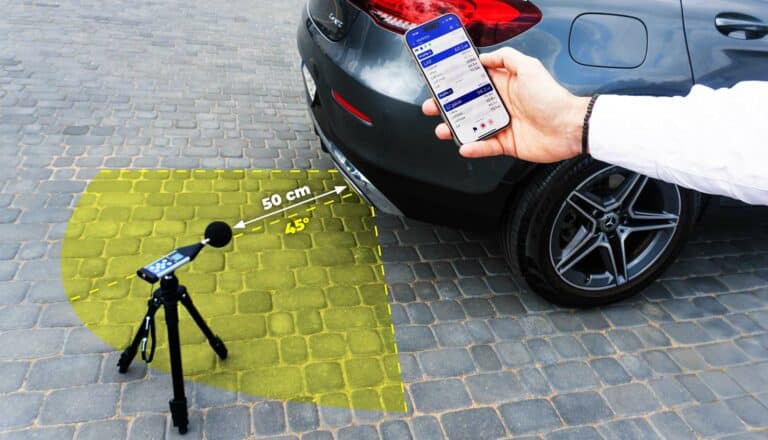
This is typically conducted on individual vehicles before they enter the circuit to screen out excessively noisy ones. The SV 971A sound level meter is ideal for this type of measurement. Measurements are taken at a 45-degree angle to the exhaust at a distance of 50 centimetres, with the engine running at 75% of its maximum power. The highest value from three consecutive measurements is compared to established noise limits. Detailed information regarding this type of measurement is contained in BS ISO 5130 – Measurements of sound pressure level emitted by stationary road vehicles, as measurements can vary depending on the vehicle category, exhaust type, and positioning. Additionally, these regulations can differ by region around the world.

car noise measurement

Noise Monitoring Systems

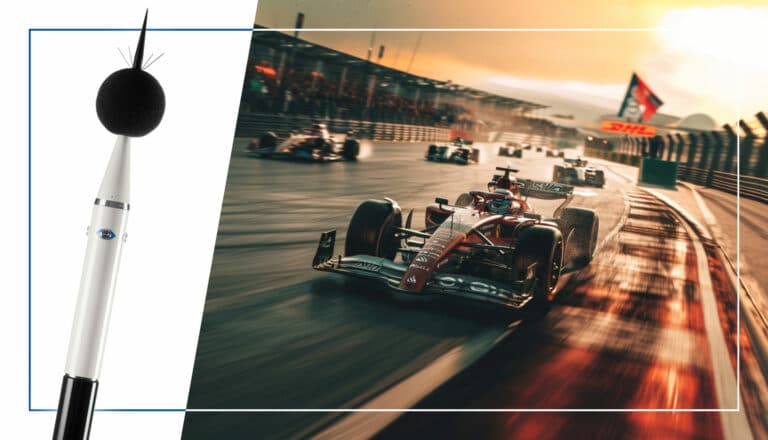
Motorsport noise monitoring involves the installation of permanent or portable noise monitoring systems at various locations around the race track, on the pit lane, and in the surrounding community to measure noise levels and exposure under race conditions. SVANTEK provides several types of noise monitoring stations, such as the SV 307A, which includes time weighting, time averaging, and real-time communication via the dedicated service Svan NET. This service allows for station management, online result sharing, and the use of Live Audio. Additionally, the SV 200A includes noise directivity detection. These types of stations operate on the tracks of the fastest race cars and are also used on test tracks by European car manufacturers.

racetrack noise monitoirng

Conclusion

Car racing noise, with levels often exceeding 130 dB, can cause immediate and permanent hearing damage. It is crucial to take preventive measures such as wearing appropriate ear protection, avoiding close proximity to the track, and utilising noise monitoring systems to ensure a safer environment for spectators and employees. Monitoring and managing noise levels effectively can help balance the thrilling experience of motor racing with the need to protect hearing health.

Request more information


    Please indicate the subject of your enquiry:

    I hereby consent to the processing of my personal data, i.e. my full name and e-mail address, by SVANTEK SP. Z O.O. with its registered office in Warsaw at ul. Strzygłowska 81 for the purpose of receiving marketing information on the products and services offered by SVANTEK SP. Z O.O. via electronic means of communication, in particular via e-mail, in accordance with the provisions of Article 10 sec. 1 and 2 of the Act on providing services by electronic means.

    I hereby consent to the processing of my personal data, i.e. my full name and phone number, by SVANTEK SP. Z O.O. with its registered office in Warsaw at ul. Strzygłowska 81 for the purpose of marketing activities with the use of telecommunications terminal equipment and automatic calling machines within the meaning of the Telecommunications Act.

    I hereby consent to receiving from SVANTEK SP. Z O.O. with its registered office in Warsaw at ul. Strzygłowska 81, via electronic means to the e-mail address I have provided, the newsletter and marketing information on the products and services offered by SVANTEK SP. Z O.O., within the meaning of the Act on providing services by electronic means.


    I declare that I have been informed that my data may be transferred to entities that process personal data on behalf of the Administrator, in particular to distributors - such entities process data on the basis of an agreement with the Administrator and exclusively in accordance with its instructions. In such cases, the Administrator requires third parties to maintain the confidentiality and security of information and verifies that they provide appropriate measures to protect personal data.

    Some of the entities processing personal data on behalf of the Administrator are established outside the EEA. In connection with the transfer of your data outside the EEA, the Administrator verifies that these entities provide guarantees of a high level of personal data protection. These guarantees stem in particular from the obligation to apply the standard contractual clauses adopted by the Commission (EU). You have the right to request a copy of the standard contractual clauses by sending a request to the Controller.

    I declare that I have been informed on my right to withdraw my consent to the processing of my personal data at any time, to access the provided personal data, to rectify, erase, restrict processing and object to the processing of my data, as well as the right to lodge a complaint with the President of the of the Personal Data Protection Office in the event of an infringement of the provisions of GDPR.