How to measure shooting range noise?

Environmental noise from shooting ranges should be measured in accordance with international standards, such as ISO 1996 or ANSI/ASA S12.9, which specify microphone placement and necessary meteorological conditions. Measurements must be performed by ISO/IEC 17025 accredited laboratories using Class 1 (Type 1) integrating-averaging sound level meters and acoustic calibrators that meet IEC 61672-1 specifications. The process requires rigorous equipment calibration, impulse noise sampling, and specialized data analysis to account for the unique characteristics of firearms.

What is the source of noise at a shooting range?

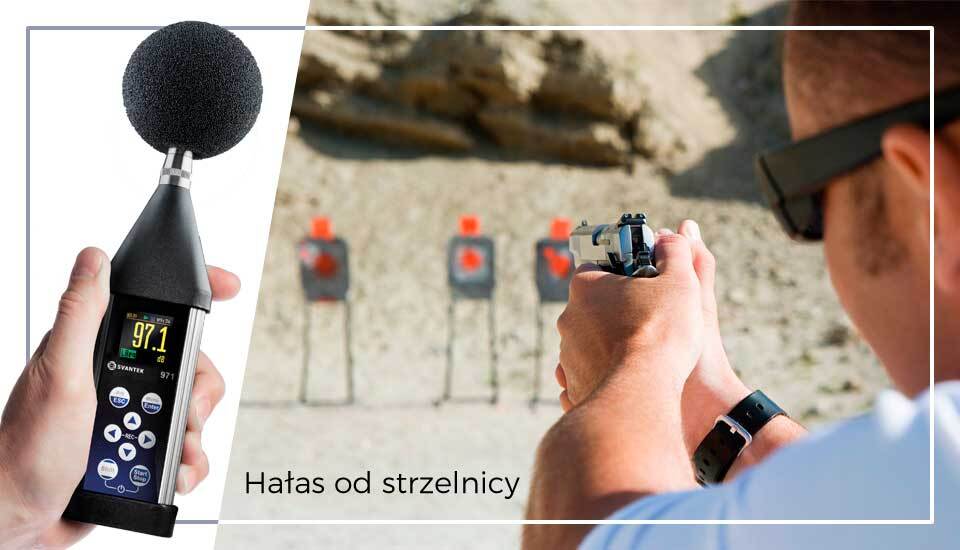
The primary noise source at a shooting range is the ‘muzzle blast’—the rapid expansion of high-pressure gases following the ignition of the propellant. Secondary sources include the ‘bow shockwave’ (supersonic crack) of the projectile and the impact on targets or backstops. These high-intensity, impulsive sounds pose significant auditory risks to participants and can cause community annoyance in nearby residential areas. Unlike steady-state environmental noise, gunshots are characterized by high peak sound pressure levels (Peak SPL) and short durations; however, international standards such as ISO 10843 provide specific methodologies for assessing such impulsive events, ensuring they are subject to strict regulatory limits similar to continuous industrial or traffic noise.

jak należy mierzyć hałas od strzelnicy?

Why measure shooting range noise?

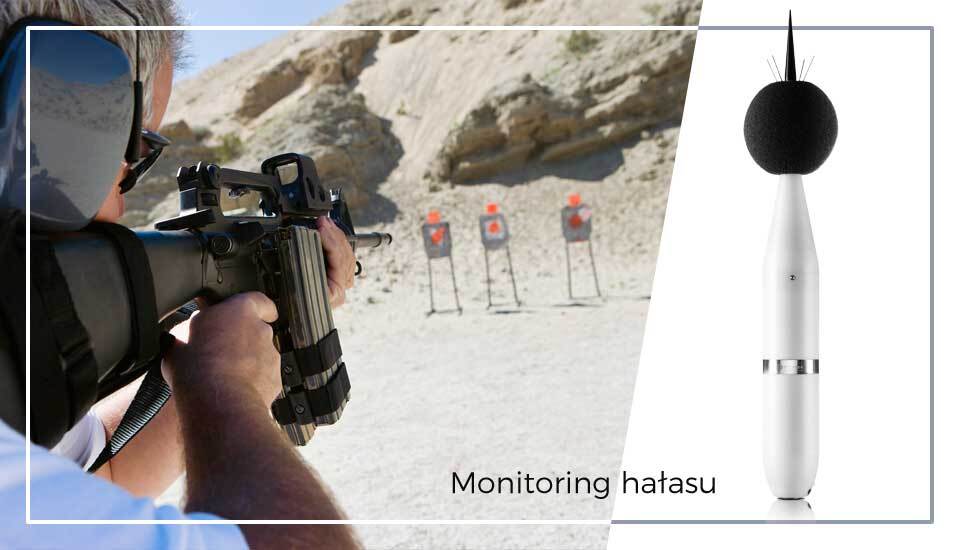
Routine monitoring of noise at shooting ranges and their perimeters is critical for protecting the auditory health of users and the well-being of local residents. In many jurisdictions, gunshot noise is classified as an environmental noise emission, and its management may be subject to regional regulations or land-use permits, especially when ranges are situated in ecologically sensitive or forested areas. Adhering to recognized international guidelines, such as those from the World Health Organization (WHO), helps mitigate long-term health risks like hearing loss and stress-related conditions. Noise assessments are a vital tool for both range operators seeking to maintain operational compliance and for residents to ensure that noise levels remain within permissible community limits.

Accurate acoustic measurements allow range operators to quantify emission levels and implement effective mitigation strategies, such as acoustic baffles, berms, or operational restrictions, to protect both users and the community. For residents, independent noise monitoring provides objective data to verify compliance with local noise ordinances or national standards. If documented levels exceed statutory thresholds, these measurements serve as a rigorous technical basis for regulatory intervention or civil litigation.

Who performs shooting range noise level measurements?

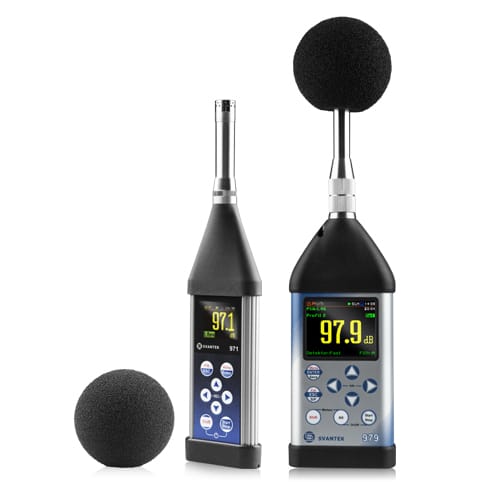
Acoustic assessments of shooting ranges should be conducted by ISO/IEC 17025 accredited laboratories or qualified acoustic consultants. To ensure international data defensibility, the equipment must include a Class 1 (Type 1) integrating-averaging sound level meter and a Class 1 acoustic calibrator meeting IEC 61672-1 and IEC 60942 standards, respectively. All instrumentation must maintain valid traceable calibration certificates, typically issued within the last 12 to 24 months depending on local regulatory requirements. Additionally, the measurement microphone must be fitted with a windscreen to mitigate environmental interference and protect the diaphragm.

What are the standards for shooting range noise?

The methodology for measuring shooting range noise is determined by national or local regulations, which typically adopt international or specialized technical standards to account for the unique characteristics of impulsive sound.

  • Germany: The Sports Facilities Noise Protection Ordinance (18. BImSchV) regulates noise from ranges. It mandates measurements based on VDI 3745 Blatt 1 (Assessment of Shooting Noise), which requires three independent measurement series under different weather conditions to determine a rating level. In residential areas, the permissible immission guide values are generally 50–55 dB(A) during the day and 35–40 dB(A) at night.
  • United Kingdom: Local authorities typically follow the CIEH Clay Target Shooting Guidance. This uses the Shooting Noise Level (SNL), a logarithmic average of the highest A-weighted sound levels. For new residential developments near established ranges, a common planning condition is that noise levels must not exceed a mean SNL of 55 dB(A).
  • United States: There is no federal environmental limit; instead, states like Arizona or Ohio set their own standards. Measurements often reference ANSI/ASA S12.9 for environmental sound. In some states, the limit is set at an hourly
    of 64 dB(A) measured 20 feet from the nearest occupied residence.
  • International Framework: For general predictive modeling and sound propagation, the ISO 17201 series (Noise from shooting ranges) provides the global technical baseline for determining muzzle blast energy and projectile sound.

Measuring shooting range noise in the US, UK, and Germany follows a similar logic to Poland—focusing on impulsive sound and distance to residential areas—but uses different legal frameworks and technical metrics. 

monitoring halasu na strzelnicy

How should shooting range noise be measured?

Impulse noise from a shooting range should be measured in accordance with applicable national or regional environmental noise regulations. Standard protocols define the placement of measurement points, which must be located in noise-sensitive areas—such as residential boundaries—where exposure is highest. The specific positioning of these points varies depending on whether the surroundings are developed or undeveloped terrain. To ensure data validity, measurements must be performed under favorable meteorological conditions, typically avoiding high winds or precipitation. The assessment relies on two primary noise indicators: LAeq,D (daytime equivalent level) and LAeq,N (nighttime equivalent level).

To accurately reflect the perceived loudness of gunshots, specific impulse adjustment factors or penalties (typically +5 to +12 dB) must be applied to the A-weighted equivalent sound level.

How long does shooting range noise measurement take?

A complete acoustic assessment of a shooting range typically spans several hours to multiple days to ensure statistical reliability. The methodology relies on capturing a representative quantity of noise samples (individual shots or series), with the required sample size determined by the statistical variance between measured events. It is critical to establish the residual (background) noise level to isolate the range’s specific contribution. The total project duration encompasses onsite equipment calibration, system deployment, environmental monitoring, and the subsequent post-processing analysis and technical reporting required for regulatory compliance.

What meter should be used to measure shooting range noise?

International standards typically mandate the use of a Class 1 (Type 1) integrating-averaging sound level meter to ensure the high degree of accuracy required for environmental noise assessments. All instrumentation must be verified before and after each measurement session using a Class 1 acoustic calibrator that meets IEC 60942 specifications. For reporting purposes, the meter is generally configured with A-frequency weighting to mimic human hearing and Fast (125ms) time weighting to capture the rapid fluctuations of impulsive firearm noise, though peak sound pressure levels (Lpeak) are often simultaneously recorded to assess immediate auditory risk.

jakim miernikiem nalezy wykonac pomiary halasu od ulicy

Practical tips:

  • Measurements should not be carried out during rainfall, and appropriate meteorological conditions must be ensured.
  • Shooting range noise is an atypical case of impulse noise and requires an individual approach.

Key takeaways

  1. Primary Noise Sources: The main source of noise is the muzzle blast (rapid gas expansion), often accompanied by a supersonic crack from the projectile. These high-intensity impulsive sounds pose auditory risks to shooters and cause significant noise pollution for nearby residents.
  2. Regulatory Status: Gunshot noise is classified as an environmental emission. While impulsive rather than continuous, it is subject to strict regulatory limits. In the US, UK, and Germany, specialized “impulse penalties” (corrections) are often added to the measured levels to account for the heightened human annoyance of gunshots.
  3. Expert Measurement: Assessments must be conducted by accredited testing laboratories or qualified acoustic consultants. They utilize Class 1 (Type 1) integrating-averaging sound level meters and calibrators that meet international IEC or ANSI standards.
  4. Standardized Limits: Permissible noise levels vary by jurisdiction but generally target a daytime limit of 50–60 dB(A) in residential zones. Technical procedures follow global benchmarks such as ISO 10843 (impulse noise), ISO 1996 (environmental description), or country-specific standards like VDI 3745 (Germany).
  5. Measurement Procedure: A valid assessment involves several stages, including field calibration, capturing a statistically significant number of noise samples, and measuring residual (background) noise. To ensure data integrity, measurements must occur under stable meteorological conditions, avoiding high winds and precipitation.

Request a Quote for Class 1 Noise & Vibration Monitoring Systems


    Please indicate the subject of your enquiry:

    I hereby consent to the processing of my personal data, i.e. my full name and e-mail address, by SVANTEK SP. Z O.O. with its registered office in Warsaw at ul. Strzygłowska 81 for the purpose of receiving marketing information on the products and services offered by SVANTEK SP. Z O.O. via electronic means of communication, in particular via e-mail, in accordance with the provisions of Article 10 sec. 1 and 2 of the Act on providing services by electronic means.

    I hereby consent to the processing of my personal data, i.e. my full name and phone number, by SVANTEK SP. Z O.O. with its registered office in Warsaw at ul. Strzygłowska 81 for the purpose of marketing activities with the use of telecommunications terminal equipment and automatic calling machines within the meaning of the Telecommunications Act.

    I hereby consent to receiving from SVANTEK SP. Z O.O. with its registered office in Warsaw at ul. Strzygłowska 81, via electronic means to the e-mail address I have provided, the newsletter and marketing information on the products and services offered by SVANTEK SP. Z O.O., within the meaning of the Act on providing services by electronic means.


    I declare that I have been informed that my data may be transferred to entities that process personal data on behalf of the Administrator, in particular to distributors - such entities process data on the basis of an agreement with the Administrator and exclusively in accordance with its instructions. In such cases, the Administrator requires third parties to maintain the confidentiality and security of information and verifies that they provide appropriate measures to protect personal data.

    Some of the entities processing personal data on behalf of the Administrator are established outside the EEA. In connection with the transfer of your data outside the EEA, the Administrator verifies that these entities provide guarantees of a high level of personal data protection. These guarantees stem in particular from the obligation to apply the standard contractual clauses adopted by the Commission (EU). You have the right to request a copy of the standard contractual clauses by sending a request to the Controller.

    I declare that I have been informed on my right to withdraw my consent to the processing of my personal data at any time, to access the provided personal data, to rectify, erase, restrict processing and object to the processing of my data, as well as the right to lodge a complaint with the President of the of the Personal Data Protection Office in the event of an infringement of the provisions of GDPR.