

Effective noise reduction in the workplace follows an internationally recognized Hierarchy of Controls, prioritizing long-term engineering and administrative solutions over temporary fixes like Personal Protective Equipment (PPE). These methods are essential for preventing Noise-Induced Hearing Loss (NIHL), as well as non-auditory health issues such as chronic stress, hypertension, and cognitive fatigue
Priority of Mitigation: The most effective method for noise reduction is eliminating the sound at its source (primary noise control). When this is not feasible, the focus shifts to engineering controls along the propagation path, such as acoustic enclosures or barriers, followed by administrative controls and personal protective equipment (PPE).
Interdisciplinary Nature: Modern noise control in industrial environments is a complex, interdisciplinary field. Effective solutions require the integration of acoustics (wave behavior), mechanical engineering (machine dynamics and vibration damping), and materials science (development of advanced sound-absorbing and damping materials).
Emerging Technologies and AI: Active Noise Control (ANC) is evolving from specialized audio markets to larger industrial applications. The integration of artificial intelligence and deep learning is becoming critical for enhancing system robustness and enabling predictive noise cancellation, allowing systems to adapt to complex, real-world noise environments in real-time.
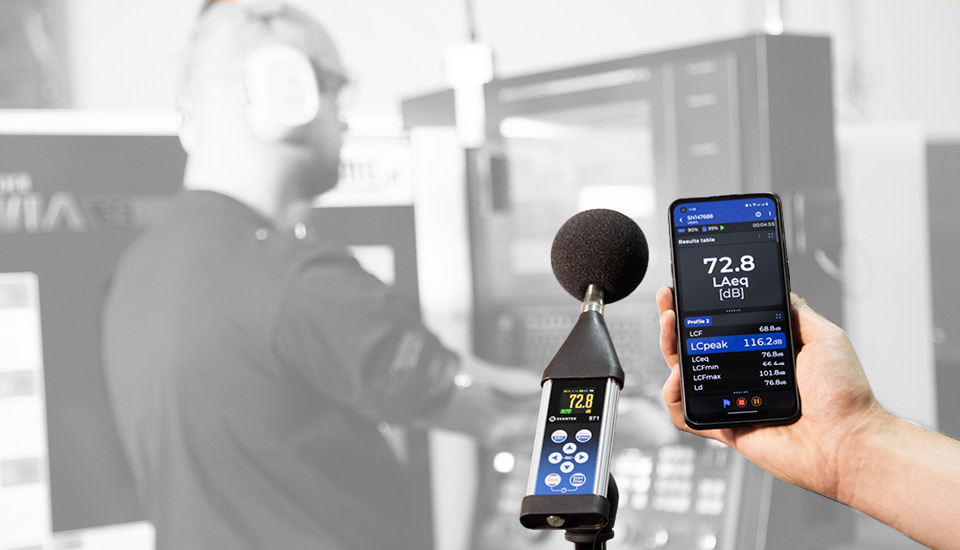
In industrial hygiene and acoustics, occupational noise is defined as any unwanted acoustic energy that may pose a risk to an employee’s health or safety. While standard audible noise is typically assessed within the 20 Hz to 20 kHz range, international regulations also recognize ultrasonic noise—high-frequency emissions (typically 10 kHz to 40 kHz) that, while largely inaudible, can cause physiological distress. To ensure compliance with standards like ISO 1996, OSHA (US), or Directive 2003/10/EC (EU), three primary metrics must be evaluated: the 8-hour time-weighted average (LEX,8h)
or TWA), the Maximum A-weighted Sound Pressure Level (LASmax) for fluctuating noise, and the C-weighted Peak Sound Pressure Level (LCpeak) to assess the risk of immediate acoustic trauma.
The character of the noise significantly influences its perceived annoyance and potential for harm, necessitating different mathematical “penalties” or adjustments in various jurisdictions. Continuous noise, generated by steady-state machinery like fans or turbines, provides a stable baseline for
calculations. Impulsive noise, characterized by rapid rises in sound pressure such as impacts or bursts, is significantly more hazardous to the inner ear and is often subject to a +5 to +12 dB adjustment in countries like Germany (VDI 2058) and the UK. Similarly, tonal noise, which contains distinct frequencies like whistles or hums, is more psychoacoustically intrusive and typically triggers a correction factor to account for increased worker discomfort and stress.
In industrial acoustics and occupational hygiene, noise mitigation follows the Source-Path-Receiver model. This structured approach is grounded in the Hierarchy of Controls mandated by OSHA (US), HSE (UK), and EU Directive 2003/10/EC, prioritizing engineering solutions over individual protection.
Reducing noise at the point of generation is the most effective strategy. This involves primary noise control through the selection of low-noise machinery or the modification of technical processes, such as replacing pneumatic actuators with electric ones or substituting metal gears with high-performance polymers. In fluid dynamics, such as HVAC and compressed air systems, reducing flow velocity and turbulence significantly lowers aerodynamic noise. Routine maintenance, including the replacement of worn precision bearings and the alignment of drive systems, is a critical technical requirement for maintaining low emission levels over the equipment’s lifecycle.
If source reduction is insufficient, noise must be intercepted during transmission using secondary noise control. Physical interventions include full acoustic enclosures, which can provide attenuation of 10 to 30 dB, provided they maintain airtight integrity; even small gaps or “acoustic leaks” for ventilation or cabling can degrade performance by 5–10 dB. For larger workspaces where total enclosure is impractical, acoustic barriers and partial shields are used to create “acoustic shadows,” though their effectiveness is limited by diffraction at lower frequencies. Additionally, treating room surfaces with high-coefficient sound-absorbing materials (e.g., mineral wool or melamine foam) reduces the reverberant sound field, preventing noise buildup in industrial halls.
The final stage focuses on the employee, but international standards view this as a secondary line of defense. Administrative controls involve work organization, such as worker rotation to limit the 8-hour Time-Weighted Average (LEX,8h) or the use of soundproofed operator cabins for remote monitoring. When engineering and administrative limits are exhausted, Personal Protective Equipment (PPE) is mandatory. The selection of earmuffs or earplugs must be precisely matched to the frequency spectrum of the noise—using HML (High, Medium, Low frequency) or Octave Band data—to ensure the protector provides adequate attenuation without over-protecting, which can hinder essential communication and safety signals.
Active Noise Control (ANC), or active noise reduction, is an advanced acoustic engineering technique based on the principle of destructive interference. The system generates an “anti-noise” signal—a sound wave with the same amplitude and frequency as the target noise but with an inverted phase (180° shift). When these two waves meet at a specific location, typically the listener’s ear or a “quiet zone,” they effectively cancel each other out, reducing the overall sound pressure level. While highly effective for specific applications, ANC is a complex, high-cost solution requiring precise electro-acoustic calibration and real-time digital signal processing (DSP) to adapt to the specific spectral characteristics of a room or machine.
The technical architecture of an ANC system relies on a sophisticated feedback or feedforward loop to maintain stability and performance. A reference microphone first captures the primary noise signal, which is processed by a high-speed controller to generate the antiphase compensation signal emitted through a secondary loudspeaker. To ensure accuracy and account for environmental changes, an error microphone is placed within the reduction zone to monitor the residual noise and provide a feedback signal for the processor to minimize the “error.” This technology is most effective in the low-frequency range (below 500 Hz), where wavelengths are long and predictable, making it ideal for mitigating tonal hums from industrial fans, transformers, or exhaust systems.
Implementing Active Noise Control (ANC) in industrial environments presents significant engineering challenges, primarily due to the physical requirements of wave phase alignment and system latency. For effective cancellation, the secondary “anti-noise” signal must reach the target zone with near-perfect phase inversion (180°) and matched amplitude. Because higher frequencies have shorter wavelengths, even a millimeter of movement by the listener or a microsecond of processing delay can cause the waves to align in phase rather than out of phase, potentially doubling the noise level (+6 dB) instead of reducing it.
Consequently, ANC is technically grounded as a low-frequency solution (typically below 500 Hz), where longer wavelengths are more stable and easier for digital signal processors (DSP) to track in real-time. Furthermore, the “quiet zone” created by these systems is highly localized, often limited to a small volume around an operator’s head or within a confined operator cabin. This spatial restriction significantly limits a worker’s mobility, as moving outside the optimized interference zone renders the system ineffective.
Localized Active Noise Reduction (ANR) focuses on controlling the acoustic field within a minimal volume, typically the ear canal or a small “quiet zone” around the operator’s head. By targeting a space of only a few cubic centimeters, these systems overcome the spatial limitations of area-wide active control, achieving significant attenuation of 20–40 dB, particularly in the low-frequency range (below 1 kHz) where passive barriers are least effective.
This personalized approach is implemented through two primary technical configurations: active headrests integrated into soundproofed operator cabins and active hearing protection (HPDs). These systems utilize a feedback-loop architecture, where an internal error microphone monitors the residual noise near the ear and a high-speed processor generates an instantaneous compensatory signal. This is a highly grounded solution for operators of heavy machinery, pilots, and industrial workers, as it provides superior protection against tonal hums and low-frequency vibrations while often incorporating electronic “hear-through” features to maintain situational awareness and verbal communication.
An authorized SVANTEK consultant will assist you with noise and vibration measurements.