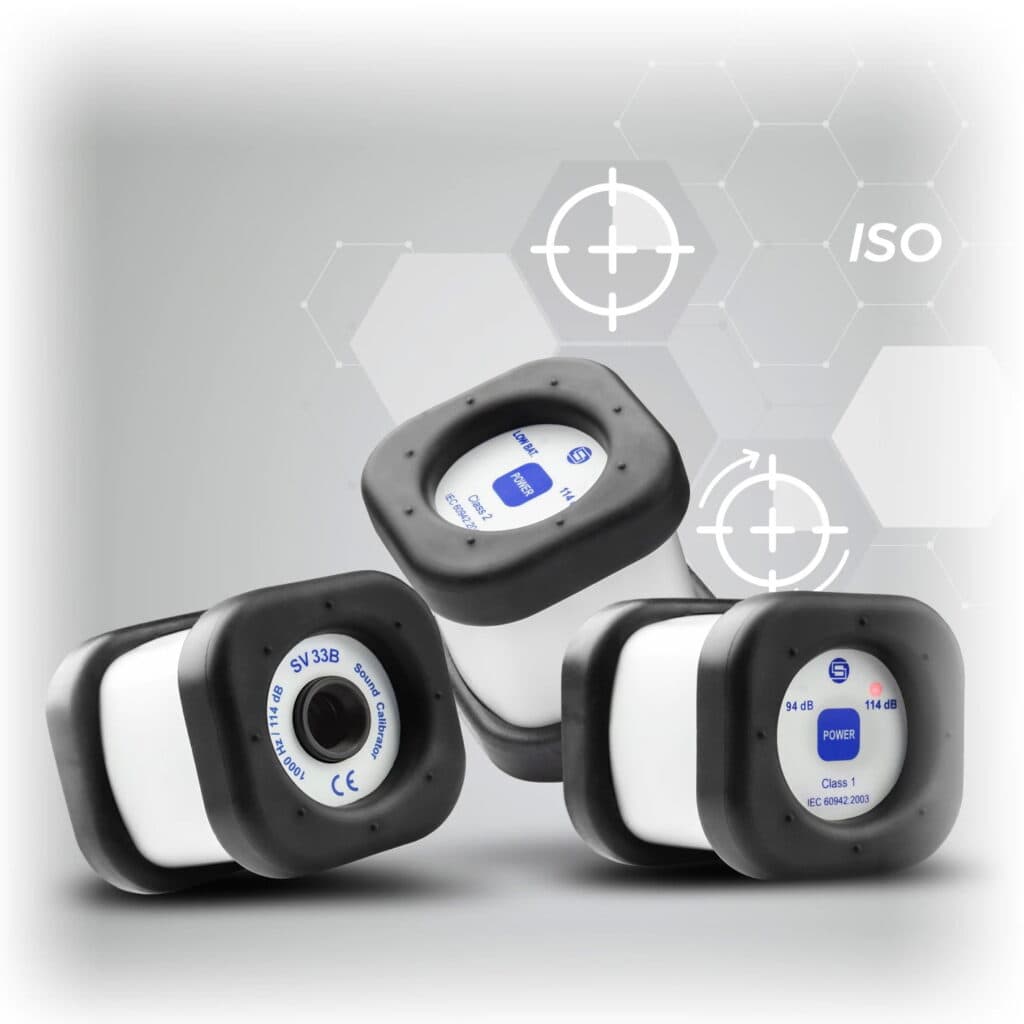
Calibration of acoustic calibrators allows for determining the exact parameters of the calibrator
Regulations related to noise and vibration measurements require testing laboratories to perform measurements using instruments calibrated no more than 5 years earlier (in Poland). Acoustic calibrators are required to calibrate the measurement chain of a sound level meter before and after measurement; therefore, it is necessary to have a calibrated acoustic calibrator. In addition, accredited laboratories are obliged to maintain measurement traceability, which includes linking the measurement result and its uncertainty to the primary measurement standard.
Additionally, measurement reports must specify the instruments used during the measurements and their last calibration date. Regulations also require the use of a Class 1 calibrator. Calibration of the calibrator makes it possible to determine its exact parameters and then, in accordance with the calibration certificate and stated uncertainty, include them in the final measurement results.
At the SVANTEK calibration laboratory, acoustic calibrators are calibrated in accordance with PN-EN 60942:2018-6 “Electroacoustics — Sound calibrators”. This standard defines requirements for individual calibrator classes: Class 1, Class 2, and Class LS. Annex B specifies periodic tests that should be carried out as part of calibration in a calibration laboratory. Based on the calibration results, the laboratory issues a calibration certificate confirming compliance with the standard requirements. Annex A of the above standard also defines procedures related to type approval of calibrators. Type approval is necessary for placing equipment such as an acoustic calibrator on foreign markets. The SVANTEK calibration laboratory calibrates Class 1 and Class 2 accuracy calibrators.
During calibration of acoustic calibrators, three parameters are determined. The first parameter is the sound pressure level generated by the calibrator, the second is the frequency of the generated signal, and the last determined parameter is the total harmonic distortion of the generated sound pressure signal. At the SVANTEK calibration laboratory, the sound pressure level of the calibrator is determined using a comparison method with a reference acoustic calibrator. The sound pressure level may also be determined based on a reference measurement microphone. All calibration-related measurements should be carried out within appropriate environmental condition ranges. These conditions should be within the following ranges: temperature from 20 to 26°C, humidity from 25% to 70%, and pressure from 970 hPa to 1050 hPa.
The calibration certificate of an acoustic calibrator includes the details of the submitting entity, the date of measurement, the type and serial number of the measured calibrator, the range of meteorological conditions recorded in the laboratory during calibration measurements, as well as the calibration results together with their uncertainties.
The price of calibrator calibration depends on the number of sound pressure levels to be calibrated.