
Indoor Noise Monitoring
Indoor noise refers to sound originating from or entering a building’s interior, typically categorised by its internal or external source. In the UK, British Standard BS 8233:2014 provides the primary guidance for sound insulation and noise reduction within buildings. This standard, alongside Approved Document E of the Building Regulations, establishes the permissible ambient noise levels and measurement methods required to ensure suitable acoustic conditions in residential and commercial rooms.

Rationale for Indoor Noise Monitoring
Excessive indoor noise levels present a significant health hazard, often going unnoticed as dangerous thresholds do not immediately trigger physical pain. However, long-term exposure can lead to severe health complications. Consistent noise pollution is linked to impaired concentration, sleep disorders, and heightened stress responses. Furthermore, chronic exposure acts as a non-specific stressor that can adversely affect the cardiovascular system, increasing the risk of hypertension, heart disease, and stroke. Monitoring is essential to identify these silent risks and implement necessary mitigation measures to protect long-term wellbeing.
Indoor Noise Classification
Indoor noise is categorized as either steady, transient, or intermittent. To evaluate steady noise according to BS 8233, several A-weighted decibel (dB) readings are averaged, though octave band analysis can be used for a more detailed frequency profile. For transient or fluctuating noise, the equivalent continuous sound level (LAeq) is measured over a specific duration to represent the average energy. Installation or mechanical noise, such as from plumbing or HVAC, further requires measuring the maximum A-weighted sound level (LAFmax) using a “slow” time weighting.
Actionable Steps for Noise Exposure
If you suspect you are being exposed to harmful or nuisance noise levels, the appropriate response depends on whether the source is domestic or professional.
- In the Workplace: Notify your employer who must conduct a noise risk assessment if levels reach 80 dB and provide hearing protection if they reach 85 dB.
- In Domestic Environments:
Contact local council and report persistent issues to your local authority’s Environmental Health department. They can investigate, install monitoring equipment, and serve an “abatement notice” to legally stop the noise.
Strategies for Auditory Health
While noise-related symptoms like tinnitus or earache are common, the health implications of excessive exposure extend to broader systemic issues. In professional environments, the Control of Noise at Work Regulations 2005 mandate that employers provide hearing protection, such as earplugs or earmuffs, if noise reaches 85 decibels (dB). For personal listening, using over-ear or noise-cancelling headphones is recommended, as these block background noise and allow for lower, safer volumes compared to in-ear buds. To maintain long-term hearing health, the “60/60 rule” is advised: listening at no more than 60% volume for a maximum of 60 minutes at a time.

Indoor Noise Measurement Protocols
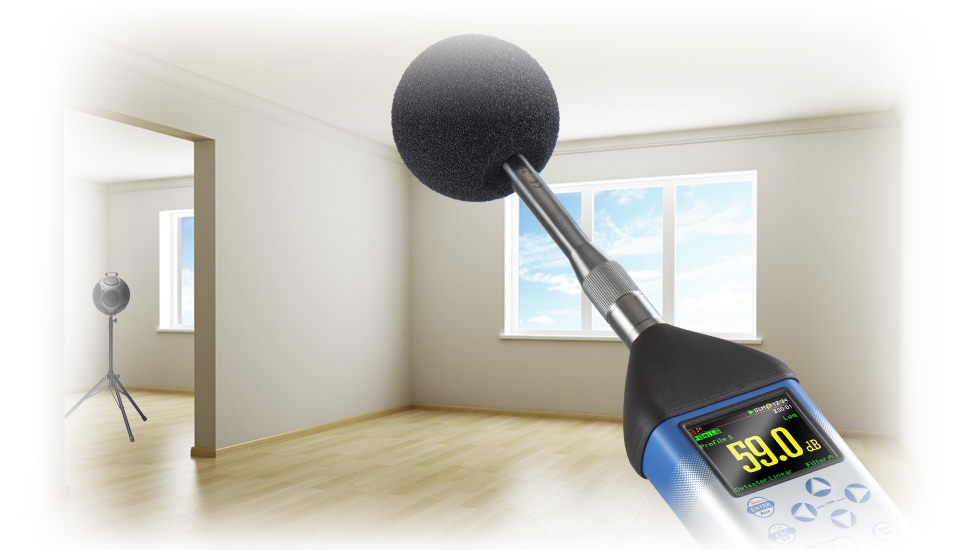
Professional noise assessments follow BS EN ISO 16032 and BS 8233 to determine the equivalent continuous A-weighted sound level (LAeq). During testing, windows and doors must remain closed, though ventilation systems must maintain the air exchange. Internal noise sources are deactivated, furniture remains in its natural position, and occupancy is limited to two technicians to prevent acoustic interference.
The number and location of measurement points are strictly dictated by room volume to ensure a representative sample. Final calculations include two essential corrections: one for the ambient acoustic background and another for the room’s reverberation time (sound absorption), ensuring the data accurately reflects the building’s performance.
Timing for Indoor Noise Assessments
Indoor noise measurements are timed to capture the most representative and “worst-case” scenarios for occupants. For residential settings, BS 8233:2014 defines the daytime period as 07:00 to 23:00 (16 hours) and the night-time period as 23:00 to 07:00 (8 hours). Professional surveys typically run for 24 to 72 hours to account for daily variations, though they may extend to a week if noise sources, such as nearby railways or airports, are highly inconsistent. When measuring specific industrial or plant noise, assessments are often concentrated during the 8 most unfavourable hours of the day or the quietest 15-minute intervals at night to ensure any disturbance is accurately recorded against the background level.
Svantek Measurement Instrumentation
Svantek is a prominent manufacturer of advanced noise and vibration measurement solutions, widely used by UK acoustic consultants and environmental health officers. Our equipment is fully compliant with the British and international standards required for official indoor and workplace noise assessments.