Building and Structural Vibration Measurements
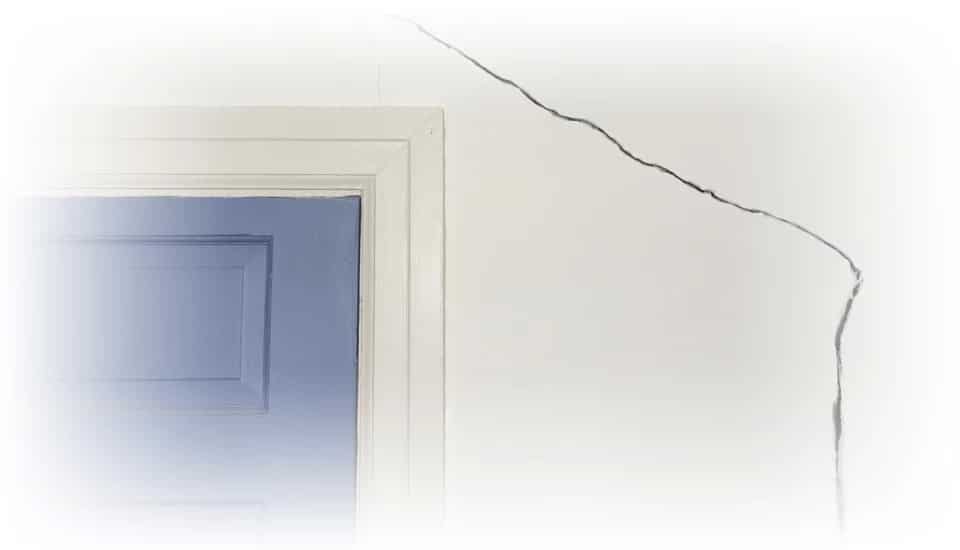
The measurement of building vibrations is managed through specific national standards that vary by country. In the United Kingdom, the primary authority for assessing structural damage is BS 7385-2, which provides guidance on vibration levels that may cause cosmetic or structural effects. For evaluating the impact of vibrations on people within buildings, BS 6472-1 is the standard used to determine the likelihood of adverse comments based on the Vibration Dose Value (VDV). Additionally, BS 5228-2 serves as a code of practice specifically for controlling vibration on construction and open sites. These British standards define the measurement methods, essential equipment, and reporting formats necessary for professional assessments.
Frequency in Structural Vibration
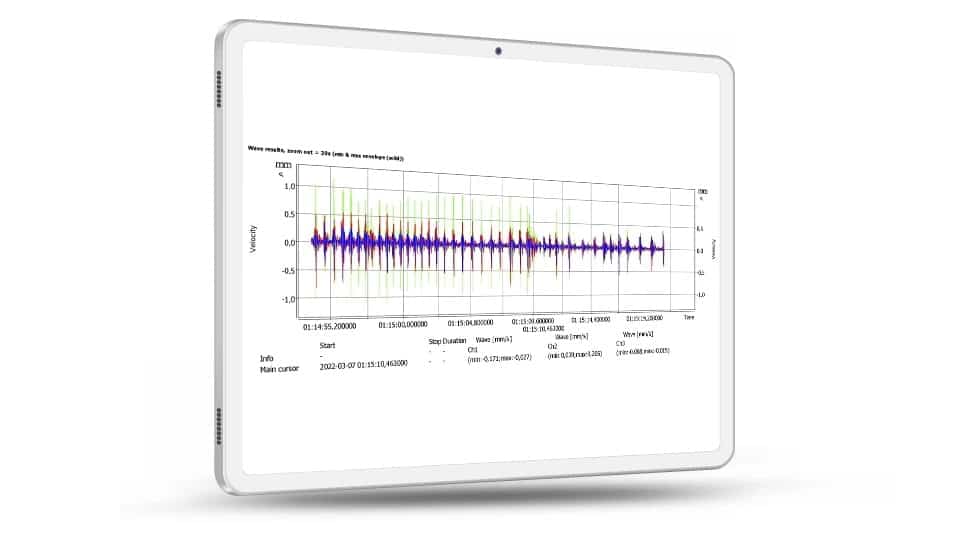
The relevant frequency range for building vibrations is determined by the spectral content of the excitation source and the building’s mechanical response. ISO 4866, as adopted in the UK, generally addresses frequencies from 0.1 Hz to 500 Hz to cover natural events like wind or earthquakes and man-made activities such as blasting or traffic. Most damage from human activity occurs between 1 Hz and 150 Hz, whereas natural sources typically impact lower ranges. Vibration intensities of interest vary from a few to several hundred millimetres per second, depending on the specific frequency and the nature of the structural element.
Building Resonance
Fundamental natural frequencies and damping characteristics determine a structure’s dynamic response and are essential for accurate vibration evaluation. These properties are typically identified through spectral analysis of ambient excitations or via controlled mechanical exciters. For preliminary assessments where full analysis is unavailable, empirical formulas relate building height to the fundamental period. Research indicates that low-rise buildings, ranging from 3m to 12m in height, generally exhibit fundamental shear frequencies between 4 Hz and 15 Hz. Because damping is often amplitude-dependent, both frequency and energy dissipation must be carefully considered during structural monitoring.
Impact of Building Base Dimensions
Ground-borne vibration wavelengths typically range from a few metres to several hundred metres. Foundations can act as a filter, particularly when wavelengths are short, leading to complex structural responses. Most British domestic properties have base dimensions smaller than the characteristic wavelengths produced by common sources, such as rail traffic or construction. However, high-frequency sources, including precision rock blasting, may produce shorter wavelengths that require more detailed analysis of the building’s footprint relative to the vibration source.
Selecting Structural Vibration Sensors
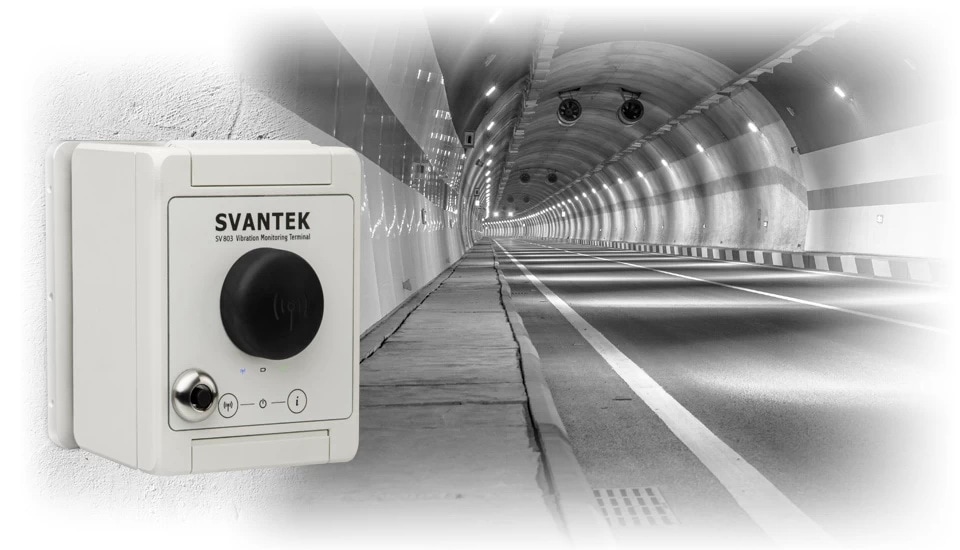
Effective structural monitoring requires selecting transducers based on operational range, with geophones preferred for high sensitivity above resonance and piezoelectric accelerometers favored for VDV or high-frequency data. Accurate data demands linear performance across the measurement chain, with a signal-to-noise ratio at least 5 dB above background, and appropriate integration for velocity measurements.
Measurement Locations and Orientation
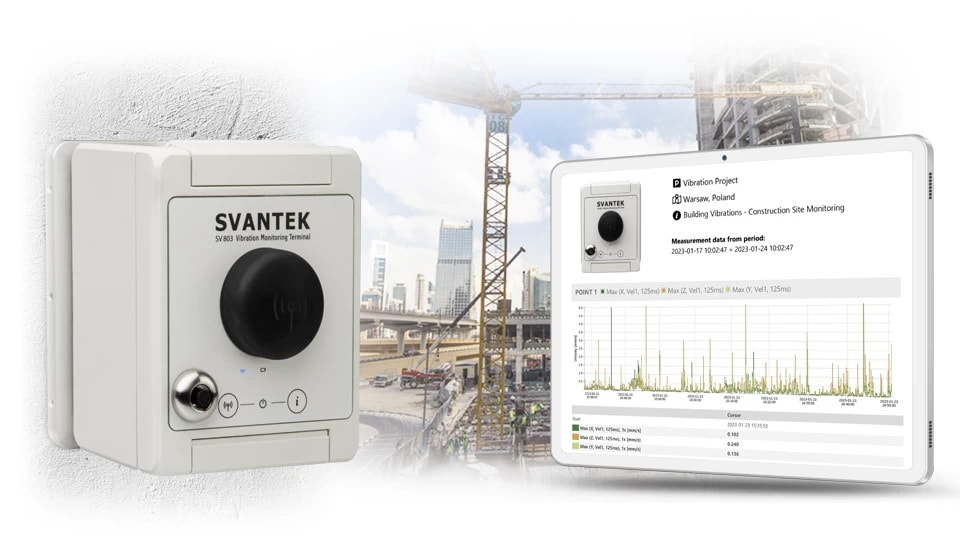
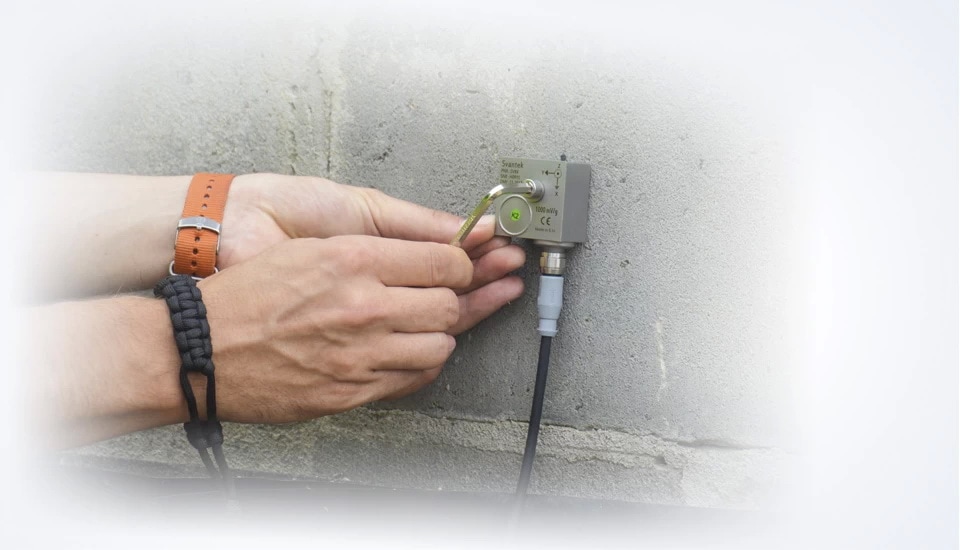
The assessment of ground-borne vibration typically begins at or near the building foundation to determine input levels. To evaluate structural racking or shear, sensors are placed on primary load-bearing members, often in triaxial configurations at building corners. When monitoring human response to vibration under BS 6472-1, measurements are taken at mid-span on floors or walls where amplitudes are highest. Sensors should be oriented toward the vibration source for ground studies, or aligned with the building’s principal axes when assessing structural response.
Transducer mounting must ensure a faithful reproduction of movement without introducing resonance. The combined mass of the sensor and its mounting should not exceed 10% of the structural element’s mass. Rigid fixings, such as expansion bolts are preferred.
Measurement Locations and Orientation
For effective ground monitoring, transducers may be fixed to a stiff steel rod—at least 10mm in diameter—driven through loose surface layers into firmer soil. To maintain signal accuracy and prevent slippage, the rod should remain nearly flush with the surface. When accelerations exceeding 2m/s2 are anticipated, or to minimise coupling distortion, sensors should be buried to a depth at least three times their primary dimension. Alternatively, instruments can be secured to a rigid surface plate, such as a well-bedded paving slab.