

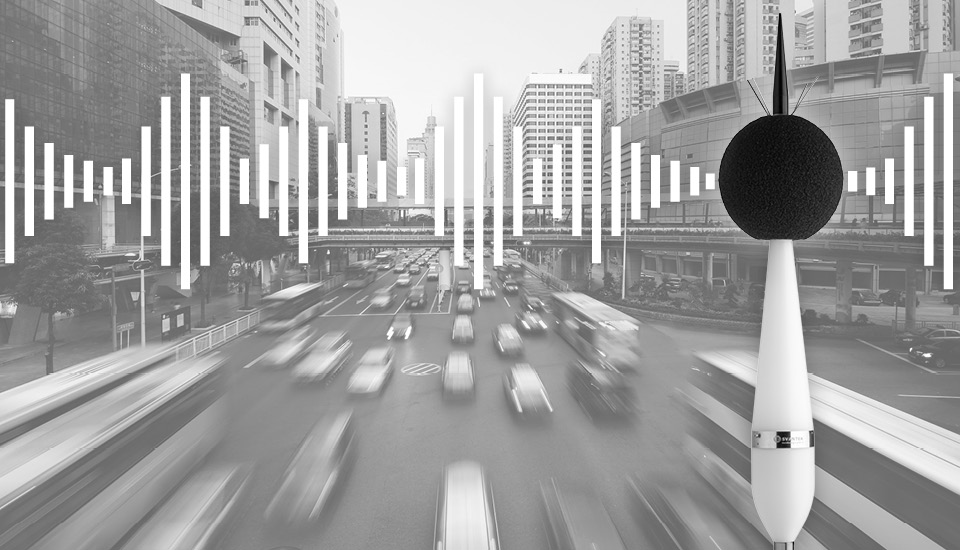
Noise is a collection of random acoustic waves with different frequencies and amplitudes that people perceive as unwanted or bothersome. While its short-term effects mainly show up as poor concentration and discomfort, long-term exposure to these loud sound levels is a proven environmental health hazard. Persistent acoustic disturbances cause sleep problems, noise-induced hearing loss, and heart issues because the body stays in a constant state of stress.
Unwanted sound exists in many different environments, which requires specific legal rules and ways to stop it. In schools, loud background noise and echoes make it hard for students to hear teachers or learn well. Similarly, noise from roads and trains and industrial workplace noise create big health problems for the whole community. Acoustic technicians use Class 1 sound level meters to map these sound profiles and find the paths the sound takes to build better walls or fix loud machines.
Noise is subjective and can vary depending on the person and the situation. Sounds such as music, conversations, or device noise may be neutral or pleasant for some people and bothersome for others. The subjective perception of noise depends on individual sensitivity and the context in which the sound occurs.
Long-term exposure to noise can lead to serious health effects. Being in a noisy environment increases the risk of hearing loss, sleep problems, mental health issues, and cardiovascular diseases. Therefore, monitoring noise levels is essential for protecting human health.
Noise occurs in different environments and has different sources. It can come from transport, industry, or human activity in residential areas. Classifying noise as traffic, industrial, and environmental—and further as continuous, impulsive, or variable—helps better understand its character.
Noise measurement is necessary to assess compliance with standards and to protect the environment. Professional sound measurements using Class 1 sound level meters enable accurate analysis of sound pressure levels and the sound spectrum. Measurement results help meet legal requirements and implement noise reduction measures.
Noise standards define permissible levels depending on the type of area and the function of the environment. Sound limits are more restrictive in protected and residential zones, and monitoring is carried out in accordance with regulations. Appropriate limits protect people from nuisance and harmful effects of noise, especially in workplaces and public environments.
Legally noise is defined as unwanted and/or harmful sound. Acoustics professionals define noise as a collection of random acoustic waves characterized by varying frequencies and amplitudes that interfere with a desired signal or human activity.
While sound refers to any audible mechanical vibration traveling through a medium like air or water, noise describes sound that interferes with human activity, health, or well-being. With prolonged exposure to noise, the ear may become accustomed to it, but this is a subjective process—people may feel that the noise is less bothersome, while in reality it can lead to serious health effects.
The subjective nature of noise is strongly linked to the individual—a teenager listening to loud music may not perceive it as noise and may find it comfortable and enjoyable, while people in the same building may interpret these sounds very differently. It is important to remember that long-term exposure to high sound levels can lead to hearing loss.
The difference between sound and noise depends entirely on the listener’s personal perception and psychological response. Sounds are acoustic waves that the human ear can detect, whereas noise is sound that the listener finds bothersome, uncomfortable, or unwanted. Because this perception is subjective, different people will classify the same acoustic event in different ways based on their own noise sensitivity.
For example, loud conversation and laughter in a social club create a pleasant atmosphere for some, while others view these same sounds as annoying noise that prevents clear communication. Music follows a similar pattern; rock or heavy metal provides enjoyment for one person, while another listener identifies the same audio as a loud and unpleasant cacophony. In the office environment, the hum of an air conditioner often feels normal or unnoticeable during a busy day, but the same sound becomes a disruptive noise at night that prevents restorative sleep in a bedroom.
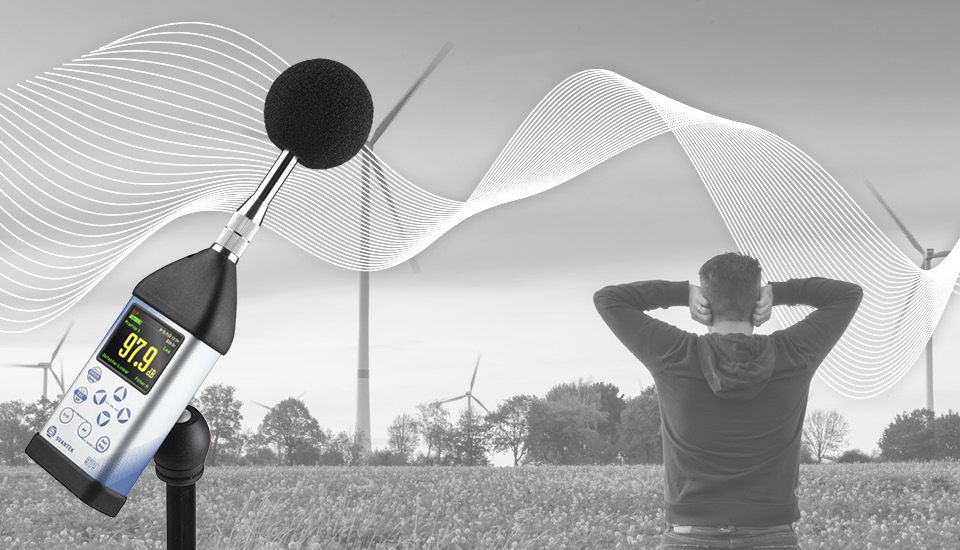
Types of noise can be distinguished based on their source or their characteristics. When analyzing noise sources, it is most often divided into:
Traffic noise is noise generated by cars, trains, or aircraft passing by. Industrial noise is strongly associated with factories or construction sites, where loud machinery is commonly encountered. Environmental noise is noise that originates from human activity.
Another classification of noise is based on its character, i.e.:
Continuous noise is noise that maintains a steady level over a longer period of time, e.g. the noise of an air conditioner in a room. Impulsive noise refers to short bangs or explosions. Variable noise is long-lasting, but its level can fluctuate over a wide range during its duration.
The effects of being exposed to noise can be very burdensome for people. The first that come to mind are hearing-related problems—hearing damage or tinnitus. A less obvious, but equally common effect of long-term exposure to noise is mental health issues such as irritability, problems with concentration or sleep, social withdrawal, and even depression. It is also important to mention cardiovascular problems—an increased risk of stroke, heart attack, or high blood pressure—as well as diabetes or obesity. To reduce the negative impact of noise on human life, relevant regulations and standards have been introduced for industrial, environmental, and traffic noise, as well as workplace noise.
Noise measurement is the process of determining the sound level in an environment using specialized instruments. The primary purpose of this measurement is to assess whether noise in a given location complies with acoustic limits and whether it poses a risk to human health. Devices such as sound level meters (SLMs) record sound pressure level in decibels (dB), and in more advanced cases analyze the acoustic spectrum, i.e. the distribution of frequencies and amplitudes.
Noise measurement is essential for assessing its impact on the environment and human health. It is carried out in workplaces, residential areas, near roads, and around factories. Measurement results make it possible to evaluate the type of noise (continuous, impulsive, variable) and its source. These analyses support decisions on noise reduction measures such as acoustic insulation, machine layout changes, or work schedule adjustments, to reduce noise exposure and improve acoustic conditions in the surroundings.
Noise measurement helps protect health and improve people’s quality of life. It makes it possible to identify sound levels that may cause negative health effects such as hearing loss, sleep disturbances, or cardiovascular diseases. Thanks to measurements, it can be determined whether noise exceeds permissible limits in the workplace, residential areas, or urban environments, which enables preventive actions such as installing acoustic insulation, changing machine layout, or using personal protective equipment.
Noise measurement is also essential for meeting legal requirements and environmental noise standards. For example, in the workplace, measurements help employers comply with occupational health and safety regulations and protect employees’ health. In public spaces, they allow traffic or industrial noise to be monitored to minimize its impact on residents. Accurate measurement data supports the development of noise reduction strategies and improves the quality of life in communities.
Noise measurements are carried out by specialists from accredited acoustic laboratories who use sound level meters. In workplaces, this is often handled by occupational health and safety services or specialized companies that, on behalf of the employer, check whether sound levels exceed the applicable limits.
When measurements show that noise levels are too high, a company or institution must take action to reduce noise. This may include installing additional insulation, changing the layout of machines, or providing better protective equipment for employees.
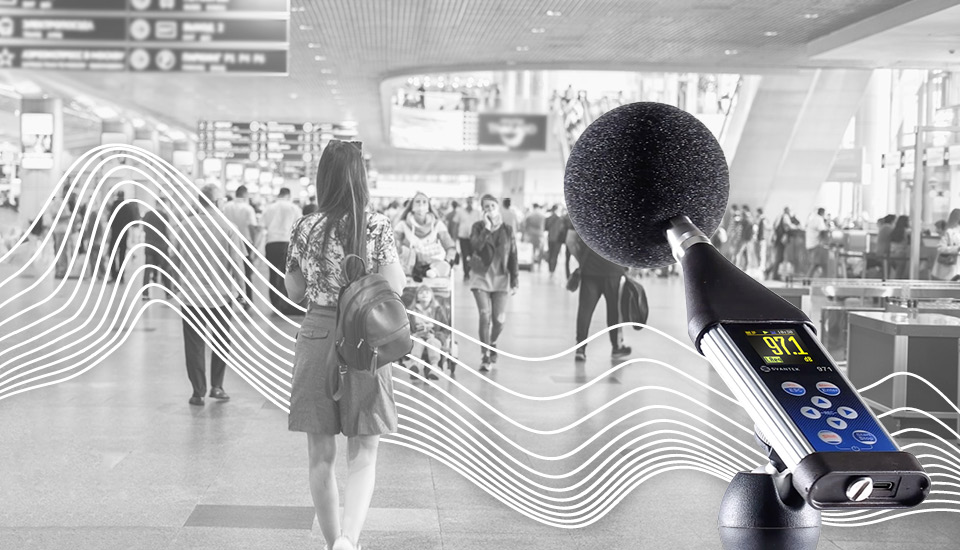
Noise is measured using sound level meters. Noise level is expressed in decibels (dB). However, sound level alone is not the only guideline for assessing noise, because not all loud sounds are unpleasant. In noise assessment, the spectrum is also important, i.e. the distribution of frequency components and their amplitudes. Acoustic spectrum analysis can provide a lot of information about the character of the noise present. When evaluating noise, it is also worth considering its duration and variability over time—whether it is impulsive, continuous, or variable noise.
For professional measurements, instruments known as Class 1 sound level meters are used. They offer high accuracy and comply with international standards. Such devices can store results and analyze the signal, and sometimes also assess what percentage of time the noise exceeds a defined threshold. This makes it possible to prepare a report and demonstrate whether limits have been exceeded.
Regular calibration of these instruments and certificates confirming their compliance with standards are essential. Only then can measurement results be considered reliable under regulations and serve as a basis for actions related to noise protection.
In Poland, noise levels must be monitored due to applicable regulations. In the case of workplace noise, inspections are carried out by the employer or by the National Labour Inspectorate (PIP) and the Central Institute for Labour Protection (CIOP). If the assessment concerns environmental noise, the responsible bodies are the Chief Inspectorate of Environmental Protection (GIOŚ), its local units (WIOŚ), or accredited laboratories that perform measurements in the environment. The accreditation aspect is particularly important, as it guarantees that measurements are carried out in accordance with current regulations and that the equipment used meets the requirements of the relevant standards.
In the United States, noise monitoring is governed by a decentralized system where the Occupational Safety and Health Administration (OSHA) regulates workplace exposure while local municipal codes handle environmental and residential disturbances. Employers are legally required to implement Hearing Conservation Programs if noise levels average above 85 dBA over an eight-hour shift, with technical guidance provided by the National Institute for Occupational Safety and Health (NIOSH). For environmental concerns, the Environmental Protection Agency (EPA) provides national guidelines, but actual enforcement and decibel limit verification are typically conducted by city code enforcement officers or accredited acoustical consultants to ensure compliance with local ordinances.
In the United Kingdom and Germany, noise oversight is characterized by high levels of technical accreditation and strict national standards. The UK’s Health and Safety Executive (HSE) enforces the Control of Noise at Work Regulations, while environmental “statutory nuisances” are managed by local councils following British Standard 4142. Similarly, Germany utilizes the Federal Environment Agency (UBA) and the Federal Immission Control Act to set rigid, legally binding limits for industrial and community noise. Both nations require that measurements be performed by laboratories accredited by bodies like UKAS or DAkkS, ensuring that Class 1 precision equipment is used to generate data that can be upheld in a court of law.
Noise standards are regulations that define what sound level is considered safe in a given place. They protect people from the harmful effects of noise exposure. In the workplace, noise requirements are more restrictive for pregnant women and juvenile workers than for other employees—this is part of occupational health and safety regulations. For measurement and noise assessment purposes, specific indicators have been developed to enable a reliable evaluation of noise at a given location. Standards also often define the measurement method to ensure repeatability, as well as requirements for the measuring equipment.
In the case of environmental noise, permissible noise levels are defined based on the type of area, e.g. residential or industrial. For areas where people live, the requirements are more restrictive in order to ensure residents’ comfort during the day and at night.
While specific limits vary by country, the technical methods for gathering data are largely harmonized through two international bodies:
IEC 61672-1 (Sound Level Meters): This is the global benchmark for professional acoustic instrumentation. It categorizes meters into Class 1 (Precision) for legal and regulatory audits and Class 2 (General) for basic surveys.
An authorized SVANTEK consultant will help You with the details such as the required accessories for your noise monitoring task.